Flatbed vs Wheel-Lift Towing: Which Is Safer?

When your car has been broken down or there is an accident, selecting the right towing process can directly impact safety and damage prevention. Understanding flatbed towing vs wheel lift towing helps you make informed decisions during stressful roadside situations. At Express Towing Service Corporation, we will also direct you on the safest towing procedure depending on the vehicle, road conditions and urgency. Our mission is to cushion your car body, motor, and suspension as well as ascertain that it meets the transportation safety regulations on the road in Ottawa.

Safest Towing Method for Different Vehicle Transport

The same equipment cannot be used to move all vehicles. The selection of tow truck types is determined by weight allocation, drive train arrangement and body design.

Safety Considerations in Towing Selection

  • Vehicle Design and Drivetrain Compatibility

All-wheel drive, front-wheel drive, and rear-wheel drive cars will need new handling methods to prevent the strain on the transmissions, breakage on the axles, and wear of tires during transportation.

  • Road and Traffic Conditions

The city traffic, the street space, and the highway recovery area influences the type of towing method that is more controllable and visible to the operator and road users.

Understanding Flatbed Towing

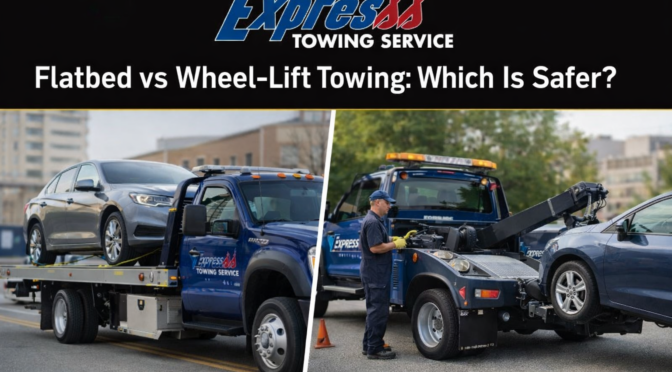
Flatbed towing involves the use of a hydraulic platform which lifts the entire car out of the road. This process removes the contact of tires with the pavements during transportation. When evaluating flatbed vs wheel lift, flatbed towing is often chosen for high-value, low-clearance, or accident-damaged vehicles.

Flatbed Towing Capabilities

  • Complete Vehicle Elevation for Maximum Protection

The vehicle is clamped to the platform and the vehicle does not rotate on the drivetrain, avoiding the possibility of scraping underneath parts or straining the suspension during transportation.

  • Stable Transport for Long Distances

Flatbed systems maintain consistent balance, making them suitable for highway towing and long-distance vehicle relocation where road vibration could cause further damage.

  • Safer Option for Non-Operational Vehicles

Vehicles with locked wheels, broken axles, or severe mechanical failure can be loaded safely without requiring rolling movement.

Understanding Wheel-Lift Towing

Wheel-lift towing raises either the front or rear wheels while the other set remains on the road. This method is faster to deploy and useful in tight spaces. In the debate of flatbed vs wheel lift, wheel-lift towing is typically selected for short-distance recovery and accessible roadside situations.

Wheel-Lift Towing Capabilities

  • Efficient Recovery in Urban Areas

Compact design allows operation in parking lots, narrow streets, and congested areas where flatbed positioning may be difficult.

  • Reduced Setup Time for Quick Assistance

Faster attachment enables quicker roadside clearance, helping restore traffic flow and reduce exposure to accident risks.

  • Suitable for Standard Passenger Vehicles

Properly used wheel-lift systems can safely transport many sedans and light vehicles over short distances without excessive mechanical stress.

Tools and Equipment Used in Professional Towing

Modern towing safety relies on specialised tools designed to stabilise vehicles and prevent movement during transit. We invest in regulated towing equipment for consistent results.

Towing Technology and Materials

  • Hydraulic Lift and Winch Systems

These systems control vehicle loading angles and prevent sudden shifts, reducing the risk of body panel damage or alignment issues.

  • High-Tensile Straps and Wheel Nets

Secure fastening materials keep vehicles stable on the platform or lift system, preventing lateral movement during braking or cornering.

  • Underlift Frames and Dolly Units

Used when drivetrain protection is required, these tools prevent wheel rotation and protect transmission systems on sensitive vehicles.

Safety Standards and Compliance

Towing operations must meet strict road safety and transport regulations. Our procedures are structured around risk reduction and equipment inspection.

Our Safety Practices

  • Pre-Tow Vehicle Assessment Protocols

We inspect tire condition, steering lock status, and damage points to determine the safest attachment method before moving your vehicle.

  • Operator Training and Load Control Procedures

Our drivers follow defined load distribution and braking guidelines, ensuring safe manoeuvring in traffic and during highway transport.

  • Compliance with Local Transport Regulations

All towing operations align with Ottawa transport and safety standards to minimise liability and ensure legal roadside recovery.

Emergency and Accident Recovery Scenarios

Different emergencies require different towing solutions. Choosing the wrong method can worsen vehicle damage or delay recovery.

Problem-Solution Towing Approach

  • Collision and Breakdown Response

For accident-damaged vehicles, flatbed systems provide controlled lifting that prevents further stress on compromised frames and suspension systems.

  • Roadside Stall and Parking Lot Removal

Wheel-lift towing enables fast extraction when space is limited and traffic disruption must be minimised.

  • Severe Weather and Night-Time Recovery

Enhanced lighting, reflective materials, and stabilisation systems ensure visibility and safety during hazardous conditions.

Why Choose Express Towing Service Corporation

We combine technical towing knowledge with structured service delivery to ensure safe and efficient vehicle transport.

Our Service Advantages

  • Method Selection Based on Vehicle Condition

We assess whether flatbed or wheel-lift towing is safer for your specific situation, avoiding one-size-fits-all solutions.

  • Local Experience with Ottawa Road Networks

Familiarity with traffic patterns and recovery zones allows us to plan secure towing routes and reduce transit risks.

  • Transparent Process and Clear Communication

You receive explanations of towing methods and safety considerations before transport begins, helping you stay informed and confident.

Book Safe Towing in Ottawa Today

If you are facing a breakdown or need vehicle transport, choosing the correct towing method is essential for safety and damage prevention. Our team specialises in flatbed towing vs wheel lift towing, ensuring your vehicle is moved using the most suitable and secure method available. Contact us today to arrange professional towing in Ottawa and experience dependable service from Express Towing Service Corporation, where your vehicle’s safety comes first.
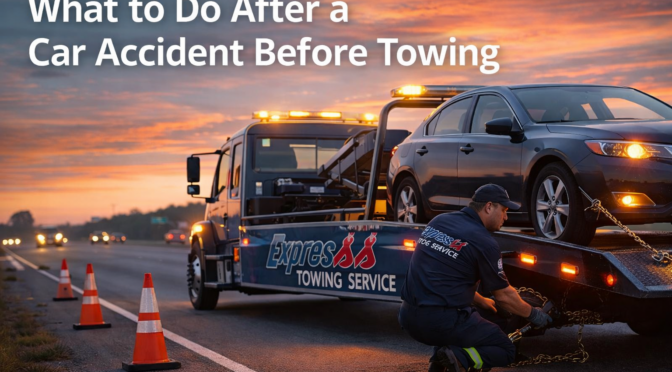
What to Do After a Car Accident Before Towing

Knowing what to do after a car accident for towing can protect your safety, your legal position, and your vehicle. In the moments following a collision, confusion and stress can lead to rushed decisions that create further risks. A structured response ensures injuries are addressed, hazards are controlled, and recovery steps are handled in the correct order before any towing action begins.

For drivers in Ottawa, understanding the correct post-accident process helps prevent secondary collisions, supports insurance claims, and ensures vehicles are recovered using approved methods rather than improvised solutions.

Insurance Towing Process and Immediate Safety Priorities

The insurance towing procedure starts with stabilization of the situation and recording of the occurrences. This stage is concerned with human safety in advance of vehicle movement.

  • Securing the Scene and Assessing Injuries

Once the vehicle is safely halted, the use of hazard lights and ensuring the occupants are not near the traffic should be resorted to. The first one is checking injuries and calling emergency services where needed. This minimizes chances of additional damages and the recovery of the vehicle will not be a priority over medical requirements.

  • Initial Documentation and Insurance Notification

There are categories of accidents that need to be reported to authorities based on the extent of damage or presence or absence of injuries. Official reports are records of the incident on a legal level. This makes the claims of insurance acceptable as well as eligible in accordance with the local laws.

Accident Recovery and Legal Responsibilities

Removal of a damaged vehicle is not the only part of accident recovery. It should be up to the rules of traffic and insurance.

  • Police Reporting and Compliance Requirements

Certain accidents must be reported to authorities depending on damage severity or injury involvement. Official reports create a legal record of the incident. This ensures accident recovery is recognized as legitimate and compliant with local regulations.

  • Choosing Authorized Towing Support

Unauthorized towing can complicate claims or lead to disputes over damage. The choice of a professional provider guarantees the transport of vehicles with approved procedures. This insures the rights of the driver and also the condition of the vehicle during transit.

Accident Towing Steps Before Vehicle Removal

Understanding accident towing steps prevents premature movement of the vehicle and preserves claim validity.

  • Power Isolation and Hazard Control

Turning off the engine, engaging the parking brake, and placing warning triangles or cones helps stabilize the situation. These actions prevent rolling hazards and secondary impacts. This creates a safer environment for responders and towing personnel.

  • Damage Assessment and Load Planning

Technicians evaluate wheel alignment, undercarriage condition, and fluid leaks before loading. This determines whether flatbed or wheel-lift towing is required. Correct load planning prevents additional mechanical damage.

Tools, Equipment, and Safe Recovery Methods

Professional towing relies on specialized equipment rather than improvised solutions.

  • Flatbed Trucks and Hydraulic Winches

Flatbeds lift vehicles fully off the road, reducing stress on damaged axles and suspensions. Hydraulic winches provide controlled pulling force. This ensures safe extraction even when vehicles are immobilized.

  • Protective Straps and Stabilization Gear

Soft straps and wheel restraints prevent shifting during transport. These materials distribute pressure evenly across the chassis. The outcome is reduced risk of transit-related damage.

Emergency Scenarios and Traffic Hazard Control

Some accidents occur in high-risk environments that require extra precautions.

  • Highway Collisions and Limited Visibility

Breakdowns on highways increase exposure to fast-moving traffic. Emergency lighting and rapid response coordination are essential. This minimizes collision risk for drivers and recovery teams.

  • Weather-Related Accidents

Snow, ice, or heavy rain reduce braking effectiveness and visibility. Towing procedures adjust speed and handling to match conditions. This ensures controlled accident recovery even in adverse environments.

Problem-Solution Framing for Post-Accident Decisions

Drivers often face the same challenges after collisions, especially when stress, shock, and time pressure interfere with clear judgment and informed decision-making at the roadside.

  • Uncertainty About Vehicle Condition

Many drivers assume short-distance driving is safe after an accident. Hidden damage to steering or braking systems can make this dangerous. Professional towing avoids mechanical failure during transit.

  • Pressure to Clear the Road Quickly

Although clearing traffic is a priority, rushing without following the required procedures may cause complications in claims. Following structured accident towing steps balances urgency with safety. This protects both legal and physical outcomes.

Long-Term Impact of Correct Towing Decisions

Proper actions influence more than immediate recovery, shaping insurance outcomes, long-term repair costs, and the overall legal and financial position of the driver after an accident.

  • Preserving Insurance Coverage

Insurers expect documented and authorized recovery. Deviating from recommended procedures can affect compensation. Correct towing supports smoother claim resolution.

  • Protecting Vehicle Repair Viability

An impaired car should not be transported in an inappropriate way as this may further deteriorate the body alignment or structure. This increases the chance of full restoration rather than total loss.

Why Rely On Express Towing Service Corporation 

At Express Towing Service Corporation, we believe that local expertise improves response efficiency.

  • Knowledge of Traffic Patterns and Regulations

Knowledge of Ottawa road layouts and reporting makes it quicker to respond and make sure the recovery is legal. This reduces delays and compliance risks.

  • Coordinated Response With Insurers and Authorities

We work alongside police and insurance providers. This brings about a cohesive recovery process. Drivers have the benefit of less administrative load.

Get Immediate Help After an Accident in Ottawa

A car accident can leave you unsure of the next step, especially when your vehicle is unsafe to drive. Knowing what to do after a car accident for towing can protect your safety, your insurance claim, and your vehicle from further damage. From scene stabilization to compliant recovery methods, every stage of towing must follow proper procedures to avoid legal or mechanical complications.In case of an emergency and you need professional help, Express Towing Service Corporation offers rapid and controlled accident recovery services in Ottawa. Call our team today to make sure your car is attended to safely, properly and within the accepted accident towing procedures.

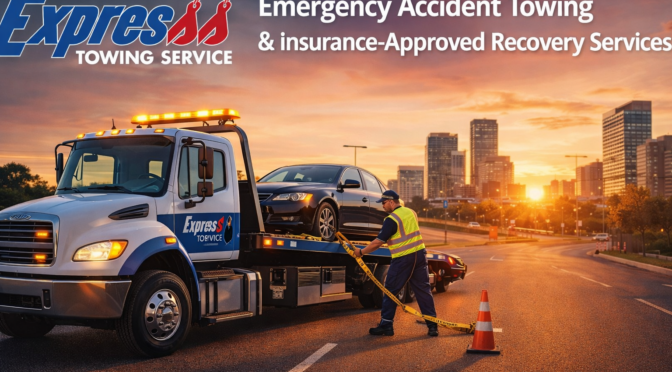
Emergency Accident Towing & Insurance-Approved Recovery Services

When an accident strikes, you need fast action, calm guidance, and a team that knows exactly what to do next. At Express Towing Service Corporation, we deliver a reliable emergency accident towing service designed to protect your vehicle, reduce your stress, and get you safely through the aftermath of a collision. We come fast, control recovery, and cooperate with insurers and officials so that you can do what is most important to you, which is your safety and recovery.

Why Our Emergency Accident Towing Service Is Built for Real-Life Crashes

Accidents can occur without any warning, and reacting to them should be professional and prompt. We rely on three pillars namely speed, safety, and coordination.

Rapid Dispatch & 24/7 Availability

We operate around the clock with GPS-dispatched units positioned across key routes and urban zones. Once you call us, we bring the closest recovery truck on the road and keep you updated until some help comes.

Certified Operators & Modern Equipment

Our trained recovery operators deal with light passenger vehicles and all the way to damaged SUVs. The reasons why we employ wheel-lift, flatbed, and integrated winch-systems are that they provide us with safe loading and transportation without causing additional damage.

On-Scene Safety Management

We secure the area, manage debris where permitted, and coordinate with traffic authorities to reduce hazards for you and other drivers. 

Highway Accident Towing — Fast Recovery Where It Matters Most

Smart Response for High-Speed Incidents

Highway crashes need special treatment. Our teams have knowledge on traffic movements, shoulder safety, and vehicle stabilization on highways.

Heavy-Duty & Multi-Vehicle Recovery

Whether dealing with the accident of a single car or a multi-vehicle crash, we use the correct type of truck and equipment to salvage vehicles in the most effective and safe way possible.

Minimizing Traffic Disruption

Our fast vehicle clearance policy is to ensure that the road gets the traffic flowing again without any undue delays.

Accident Towing Insurance Support — Clear Guidance When You Need It

Insurance in the wake of a crash may be baffling. That’s why we provide accident towing insurance support that simplifies the process from the very first call.

During this phase, we assist you to know the coverage plan, find authorized repair centers and ensure all towing and recovery measures are in accordance with insurers. Our staff records the recovery appropriately and provides the necessary information to your provider, which would avoid delays and conflicts. Our assistance helps you to keep out the guesswork and remain sure that your claim process is on schedule.

How Our Recovery Process Works

Step 1: Immediate Call Intake

We collect your location, vehicle details, and accident type to send the correct recovery unit.

Step 2: Safe Arrival & Vehicle Stabilization

Our operator assesses the scene, secures your vehicle, and prepares it for transport using approved recovery techniques.

Step 3: Damage-Aware Transport

To avoid additional structural and mechanical damages, we apply flatbed or wheel-lift towing depending on the state of your car. 

Step 4: Delivery to Your Chosen Location

We transport your vehicle to your home, a repair shop, or an insurance-approved facility—your choice.

Accident Towing Insurance for Stress-Free Claims

Direct Coordination with Insurers

We provide accurate service records, timestamps, and recovery notes so your claim documentation remains clear and complete.

Approved Repair Network Connections

We can guide you to trusted body shops and collision repair centers that work directly with insurers.

Transparent Cost Communication

Our team explains service charges upfront so there are no unexpected surprises when the paperwork arrives.

Specialized Accident Recovery Services We Offer

Rollover & Off-Road Recovery

We retrieve vehicles from embankments, ditches, and uneven terrain using controlled winching systems.

Disabled Vehicle Transport

For vehicles that cannot be driven after impact, we provide safe and secure flatbed transport.

Total Loss & Salvage Recovery

When a vehicle is deemed beyond repair, we manage its transport to designated salvage or assessment yards.

Why Drivers Trust Express Towing Service

Experience You Can Rely On

We’ve supported thousands of motorists through difficult moments, delivering dependable service when it counts most.

Customer-First Communication

We explain every step clearly so you always know what’s happening with your vehicle.

Damage Prevention Focus

Our recovery methods are designed to protect your car’s frame, wheels, and underbody during transport.

Fast Turnaround Times

We work efficiently so your vehicle reaches its destination without unnecessary waiting.

What to Do Immediately After an Accident

1. Ensure Safety First

Move to a safe area if possible and turn on hazard lights.

2. Call Emergency Services

If anyone is injured, contact local authorities right away.

3. Contact Our Towing Team

Once safe, call us for immediate assistance and recovery.

4. Gather Basic Information

Take photos and note details for your insurance provider.

5. Let Us Handle the Transport

We’ll recover and transport your vehicle while you manage next steps.

Technology-Driven Dispatch & Recovery

GPS-Enabled Fleet Tracking

We use live tracking to ensure the nearest available unit reaches you quickly.

Digital Job Records

Every recovery is logged digitally for easy sharing with insurers and repair facilities.

Optimized Routing

Our systems choose the fastest and safest routes for vehicle transport.

Vehicle Types We Recover

  • Passenger cars and sedans
  • SUVs and crossovers
  • Light commercial vehicles
  • Motorcycles
  • Fleet and company vehicles

No matter what you drive, we tailor our approach to your vehicle’s condition and location.

Community-Focused Emergency Support

We don’t just tow vehicles—we help people through stressful moments. Our operators are trained to provide calm, professional assistance at accident scenes, ensuring you feel supported from the first call until your vehicle is safely delivered.

Your Most Trusted Partner After an Accident

At Express Towing Service Corporation, we know that accidents bring uncertainty, stress, and urgency. That’s why we combine fast response, professional recovery, and insurance-ready documentation into one dependable solution. When your vehicle is damaged and your plans are disrupted, you deserve a team that treats your situation with urgency and care. Call us anytime for an emergency accident towing service that gets you moving forward again—safely and confidently.

How Fast Can a Tow Truck Arrive During Emergencies?

When your vehicle breaks down or you’re involved in an accident, every minute feels longer than it should. Many drivers ask how fast can a tow truck arrive when they need urgent help. At Express Towing Service Corporation, we focus on rapid dispatch, efficient routing, and clear communication so you are never left guessing. We understand that emergencies don’t follow a schedule, which is why our team is built around readiness, reliability, and speed. This guide explains what influences arrival times, how professional towing teams prepare for emergencies, and what you can do to help us reach you faster when you need support the most.

Why Emergency Towing Speed Matters in Roadside Situations

Speed is not just about convenience—it is about safety. The quicker assistance arrives, the lower the risk of further damage or roadside danger.

Reducing Traffic Risks

A stalled or damaged vehicle on a busy road creates a hazard for other drivers. Faster arrival helps:

  • Move your vehicle out of traffic
  • Reduce the chance of secondary collisions
  • Restore safer driving conditions

Limiting Vehicle Damage

Delays can worsen mechanical problems. Prompt towing prevents:

  • Overheating engines
  • Tire and suspension damage
  • Further electrical issues

Supporting Driver Wellbeing

Waiting too long in stressful conditions affects both safety and confidence. Our goal is to give you reassurance through fast, professional support.

What Influences Tow Truck Response Time in Canada

Several factors determine tow truck response time in Canada. Understanding them helps set realistic expectations while highlighting how our systems are designed to reduce delays.

Location and Distance

Urban areas usually allow quicker dispatch due to:

  • Higher truck availability
  • Shorter travel routes
  • Better road connectivity

Rural or remote locations may take longer, but our routing systems help minimize that delay.

Time of Day and Traffic Conditions

Peak traffic hours can slow any vehicle, including tow trucks. We plan around:

  • Rush-hour congestion
  • Weather-related slowdowns
  • Construction zones

Our dispatch software helps identify the quickest available route.

Type of Emergency

Not all situations require the same equipment. For example:

  • Flat tires need standard roadside support
  • Accidents may require specialized recovery vehicles
  • Mechanical failures vary in complexity

Matching the right truck to the job helps avoid unnecessary waiting.

How Dispatch Technology Improves Emergency Response

Modern towing relies heavily on technology to improve efficiency.

GPS-Based Vehicle Tracking

We use GPS to:

  • Identify the nearest available unit
  • Monitor traffic in real time
  • Send accurate arrival estimates

This allows us to reduce unnecessary travel and improve coordination.

Automated Call Routing

When you contact us:

  • Your request is logged instantly
  • The closest suitable truck is assigned
  • Drivers receive direct location details

This process removes guesswork and speeds up deployment.

Real-Time Communication

You receive updates so you know:

  • When help is on the way
  • How long the journey should take
  • Who is assisting you

Clear communication reduces uncertainty and stress.

Preparing Tow Teams for Rapid Response

Speed also depends on preparation. We invest in readiness so you benefit from faster service.

Driver Training

Our drivers are trained to:

  • Navigate emergency routes efficiently
  • Assess situations quickly
  • Load and secure vehicles safely

This balance of speed and safety ensures professional results every time.

Fleet Readiness

Our vehicles are:

  • Regularly inspected
  • Fueled and stocked with essential tools
  • Equipped for various recovery scenarios

A prepared fleet means fewer delays once a call is received.

24/7 Availability

Emergencies don’t stop after business hours. We operate around the clock so you’re never without assistance, whether it’s midday traffic or late-night travel.

What You Can Do to Help a Tow Truck Arrive Faster

Your actions play a role in speeding up the process.

Share Accurate Location Details

When calling for help, provide:

  • Street names or highway numbers
  • Nearby landmarks
  • Direction of travel

Precise information helps dispatch locate you without confusion.

Describe the Situation Clearly

Let us know if:

  • Your car is blocking traffic
  • You’ve been in an accident
  • The vehicle won’t start

This helps us send the correct truck and equipment right away.

Stay Visible and Safe

If possible:

  • Turn on hazard lights
  • Move to a safe area
  • Remain with your vehicle

Visibility makes it easier for the driver to spot you quickly.

Typical Emergency Scenarios and Response Expectations

Different situations require different response strategies.

Breakdown on a City Road

In most urban cases:

  • A nearby unit is dispatched
  • Traffic routing is optimized
  • Arrival is typically quicker due to shorter distances

Highway or Remote Area Breakdown

These situations may involve:

  • Longer travel distances
  • Limited nearby units
  • More complex recovery planning

Even then, our system prioritizes the fastest available option.

Accident Recovery

Accident scenes require:

  • Extra safety measures
  • Coordination with authorities
  • Specialized towing equipment

Although safety checks take time, we still work to reach you as fast as conditions allow.

Why Reliable Timing Builds Trust in Emergency Services

Consistency matters as much as speed.

Predictable Service Standards

You deserve to know what to expect. Our process is designed to:

  • Provide realistic time estimates
  • Deliver dependable arrival windows
  • Avoid unnecessary delays

This transparency builds confidence in our service.

Balancing Speed and Care

Rushing without care can cause damage. We aim for:

  • Efficient arrival
  • Safe loading procedures
  • Professional handling

This ensures your vehicle is protected as well as retrieved quickly.

The Role of Weather in Emergency Towing Speed

Weather can change everything on the road.

Rain and Snow Conditions

Slippery surfaces require:

  • Reduced driving speed
  • Extra caution during loading
  • Adjusted routes

Although weather may affect timing, our trained drivers adapt without compromising safety.

Extreme Temperatures

Heat and cold both influence vehicle breakdown rates. We prepare by:

  • Maintaining our fleet for seasonal conditions
  • Ensuring equipment works in extreme climates
  • Monitoring traffic patterns during weather events

Preparation helps us remain dependable year-round.

Planning for Faster Emergency Support

Preparation isn’t just for tow companies—it’s for drivers too.

Keep Emergency Numbers Handy

Store towing contact details in:

  • Your phone
  • Your glove compartment
  • A roadside emergency kit

Quick access saves valuable time.

Know Your Coverage Options

Understanding what support you have available helps you:

  • Avoid delays searching for help
  • Contact the right service immediately
  • Reduce stress during emergencies

How Our Service Approach Supports Quick Arrivals

At Express Towing Service Corporation, our structure is built around response efficiency.

Integrated Dispatch System

We combine:

  • GPS tracking
  • Call management software
  • Driver coordination tools

This creates a streamlined process from call to arrival.

Local Area Knowledge

Our drivers know the road networks, which helps:

  • Avoid congestion
  • Choose faster alternative routes
  • Reach you without unnecessary detours

Continuous Improvement

We regularly evaluate:

  • Response times
  • Route efficiency
  • Communication quality

These reviews help refine our operations so you benefit from better service over time.

Understanding Expectations Without Guesswork

While no service can guarantee an exact arrival minute, preparation and coordination make a measurable difference.

What You Can Expect

You can expect:

  • Prompt dispatch after your call
  • Updates during the wait
  • Professional handling upon arrival

Our goal is not just speed, but reliability combined with care.

Why Speed Alone Is Not Enough

Fast arrival must still allow for:

  • Safe roadside procedures
  • Proper vehicle securing
  • Clear communication

This balance protects both you and your vehicle.

Final Thoughts – When Speed Meets Professional Support

Knowing how fast can a tow truck arrive provides peace of mind when emergencies strike. Response times depend on location, conditions, and equipment needs, but the right systems and trained teams make a major difference. At Express Towing Service Corporation, we focus on rapid dispatch, skilled drivers, and constant communication so you never feel stranded. When an emergency happens, you can rely on our process to get help moving toward you as quickly and safely as possible—because your time, safety, and confidence on the road matter.