

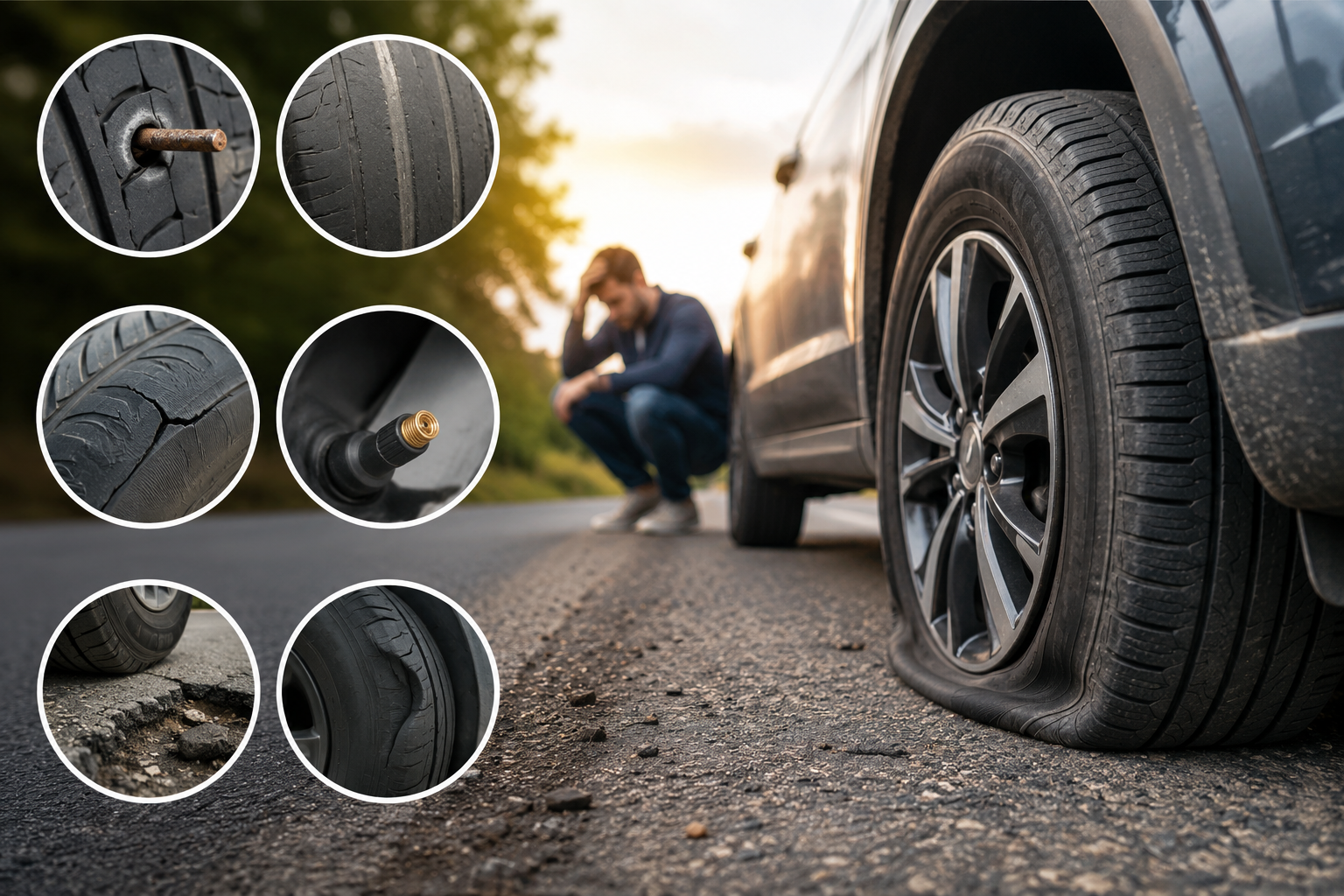
Few vehicle problems are as frustrating as discovering a flat tire when you’re already running late or far from your destination. Whether you’re commuting to work, heading out on a road trip, or simply running errands, a flat tire can quickly disrupt your plans and create unexpected expenses. Many drivers wonder what causes flat tires and whether these incidents can be prevented. The good news is that understanding the most common causes of tire failure can help reduce your risk, improve safety, and extend the life of your tires.
Most drivers experience Flat Tires at some point, but many are surprised to learn that flats are not always caused by nails or sharp objects. Tires are constantly exposed to road hazards, changing weather conditions, and everyday wear and tear. Over time, even a small issue can develop into a significant problem.
Modern tires are designed to be durable, but they still require regular inspection and maintenance. Understanding the factors that contribute to tire failure can help drivers identify warning signs early and avoid roadside emergencies.
When people ask what causes flat tires, the answer is rarely limited to a single factor. Several conditions can contribute to a loss of tire pressure or complete tire failure.
One of the most common causes of tire punctures is debris on the road. Nails, screws, broken glass, metal fragments, and sharp construction materials can penetrate the tire tread.
Drivers often encounter these hazards in:
A puncture may cause an immediate loss of air or create a slow leak that becomes noticeable over time.
Tires naturally wear down with use. As tread depth decreases, the tire becomes more vulnerable to punctures, blowouts, and other forms of damage.
Even if a vehicle is not driven frequently, tire rubber gradually deteriorates due to age, heat exposure, and environmental conditions. Older tires can develop cracks that weaken their structure and increase the likelihood of failure.
Many drivers ignore minor tire issues because their vehicle still appears to drive normally. However, a slow leak can eventually become a complete flat.
Common warning signs include:
Prompt flat tire repair can often prevent more expensive replacements and improve overall vehicle safety.
Consider a driver who notices a tire losing a few pounds of pressure each week. Assuming it’s simply temperature-related, they continue driving without inspection. Weeks later, the tire suffers a complete failure on a busy highway because a small puncture was left untreated.
Early detection and repair could have prevented the situation entirely.
One of the most overlooked tire damage causes is incorrect tire pressure.
Underinflated tires create excessive friction with the road surface. This additional heat buildup increases wear and places extra stress on the tire structure.
Potential consequences include:
Overinflated tires can be equally problematic. Excessive air pressure reduces the contact patch between the tire and the road.
This may result in:
Checking tire pressure regularly remains one of the simplest and most effective maintenance practices.
Potholes are a major contributor to tire damage across many regions. Striking a pothole at speed can cause immediate or hidden damage.
Common issues include:
Even when damage is not immediately visible, impacts can weaken the tire and increase the risk of future failure.
Many drivers underestimate how much damage can occur when hitting a curb. The sidewall of a tire is particularly vulnerable because it lacks the protective tread found on the contact surface.
Repeated curb impacts may eventually lead to sidewall cracks or internal damage that contributes to flat tires.
Proper vehicle maintenance plays a significant role in preventing tire problems.
During regular inspections, drivers should check for:
Identifying issues early often prevents breakdowns and unexpected repair costs.
Poor wheel alignment can accelerate tire wear significantly.
Signs of alignment problems include:
Over time, excessive wear caused by alignment issues can weaken the tire and increase the likelihood of failure.
Hot weather can place considerable stress on tires. High temperatures increase internal air pressure and accelerate rubber degradation.
During summer months, drivers should pay close attention to tire pressure and condition, especially before long trips.
Cold temperatures can also affect tire performance.
Potential issues include:
Seasonal inspections are an important part of tire maintenance.
Many requests for roadside help could be avoided through preventive maintenance.
Common situations include:
Professional roadside assistance providers frequently encounter tire-related emergencies that began as minor maintenance concerns.
Drivers who perform routine inspections are often less likely to experience unexpected breakdowns.
A simple monthly pressure check can significantly reduce the risk of tire failure.
Use a reliable tire gauge and compare readings with the manufacturer’s recommended specifications.
Tire rotation promotes even wear and extends tire life.
Most manufacturers recommend rotation every 5,000 to 8,000 miles, although recommendations may vary by vehicle.
Adequate tread depth is essential for traction and safety.
Insufficient tread increases the risk of:
Long-distance travel places additional stress on tires.
Before departing, inspect for:
This simple step can help prevent many roadside incidents.
While punctures are common, many other factors contribute to tire failure, including poor maintenance, weather conditions, impact damage, and aging.
Even brand-new tires can suffer punctures, manufacturing defects, or damage from road hazards.
Slow leaks often indicate an underlying problem that can worsen over time. Addressing them promptly reduces the risk of a complete flat.
Ignoring warning lights can allow minor issues to become major safety concerns.
Experienced automotive professionals consistently recommend a proactive approach to tire care.
Some practical recommendations include:
Drivers who follow these habits often experience fewer tire-related problems and enjoy improved vehicle performance.
Even the most careful drivers occasionally encounter unexpected tire issues. When a flat occurs, having access to reliable roadside support can make a stressful situation much easier to manage.
Companies such as Express Towing Services frequently assist drivers dealing with flat tires, tire damage, and roadside emergencies. Their experience highlights how many tire failures stem from preventable issues that could have been identified earlier through routine inspections.
For motorists who experience a flat away from home, professional assistance can provide safe and efficient support while minimizing disruption to travel plans. Express Towing Services understands the importance of responding quickly when drivers encounter tire-related breakdowns.
Understanding what causes flat tires is one of the most effective ways to prevent unexpected breakdowns and improve vehicle safety. From road debris and weather conditions to improper inflation and neglected maintenance, many factors contribute to tire failure.
Regular inspections, proper inflation, prompt repairs, and proactive maintenance can significantly reduce the likelihood of experiencing Flat Tires. By paying attention to warning signs and adopting good tire care habits, drivers can improve safety, extend tire life, and avoid costly roadside emergencies.
When unexpected situations do occur, trusted providers like Express Towing Services can offer valuable assistance and help get drivers back on the road safely. Investing a little time in tire care today can save considerable time, money, and stress in the future.
The most common causes include punctures from nails or debris, underinflation, overinflation, pothole impacts, worn tread, sidewall damage, and aging tires. Many flat tires result from a combination of these factors rather than a single issue.
Yes. Tires can lose air due to valve stem leaks, damaged rims, poor seals, sidewall cracks, temperature changes, or internal structural damage. Not all flat tires are caused by sharp objects.
Experts generally recommend checking tire pressure at least once a month and before any long trip. Consistent monitoring helps identify slow leaks and ensures optimal tire performance.
Yes. Potholes can cause sidewall damage, internal tire separation, bent wheels, and air leaks. Even a single severe impact may weaken a tire and increase the risk of future failure.
A tire should typically be replaced if the damage involves the sidewall, if the puncture is too large, if tread depth is excessively worn, or if the tire shows signs of structural deterioration. A qualified tire professional can determine whether repair or replacement is the safer option.


