
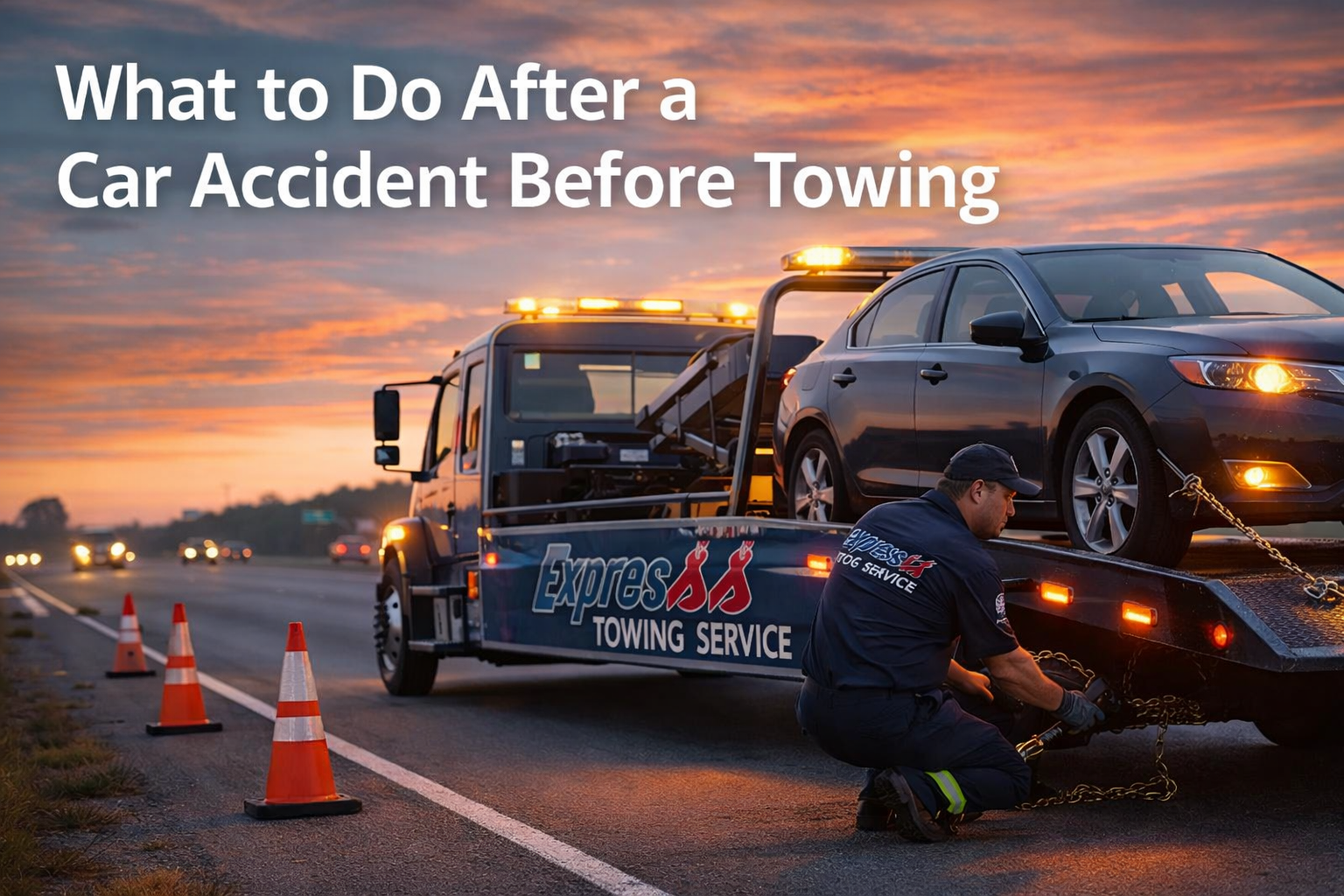
Knowing what to do after a car accident for towing can protect your safety, your legal position, and your vehicle. In the moments following a collision, confusion and stress can lead to rushed decisions that create further risks. A structured response ensures injuries are addressed, hazards are controlled, and recovery steps are handled in the correct order before any towing action begins.
For drivers in Ottawa, understanding the correct post-accident process helps prevent secondary collisions, supports insurance claims, and ensures vehicles are recovered using approved methods rather than improvised solutions.
The insurance towing procedure starts with stabilization of the situation and recording of the occurrences. This stage is concerned with human safety in advance of vehicle movement.
Once the vehicle is safely halted, the use of hazard lights and ensuring the occupants are not near the traffic should be resorted to. The first one is checking injuries and calling emergency services where needed. This minimizes chances of additional damages and the recovery of the vehicle will not be a priority over medical requirements.
There are categories of accidents that need to be reported to authorities based on the extent of damage or presence or absence of injuries. Official reports are records of the incident on a legal level. This makes the claims of insurance acceptable as well as eligible in accordance with the local laws.
Removal of a damaged vehicle is not the only part of accident recovery. It should be up to the rules of traffic and insurance.
Certain accidents must be reported to authorities depending on damage severity or injury involvement. Official reports create a legal record of the incident. This ensures accident recovery is recognized as legitimate and compliant with local regulations.
Unauthorized towing can complicate claims or lead to disputes over damage. The choice of a professional provider guarantees the transport of vehicles with approved procedures. This insures the rights of the driver and also the condition of the vehicle during transit.
Understanding accident towing steps prevents premature movement of the vehicle and preserves claim validity.
Turning off the engine, engaging the parking brake, and placing warning triangles or cones helps stabilize the situation. These actions prevent rolling hazards and secondary impacts. This creates a safer environment for responders and towing personnel.
Technicians evaluate wheel alignment, undercarriage condition, and fluid leaks before loading. This determines whether flatbed or wheel-lift towing is required. Correct load planning prevents additional mechanical damage.
Professional towing relies on specialized equipment rather than improvised solutions.
Flatbeds lift vehicles fully off the road, reducing stress on damaged axles and suspensions. Hydraulic winches provide controlled pulling force. This ensures safe extraction even when vehicles are immobilized.
Soft straps and wheel restraints prevent shifting during transport. These materials distribute pressure evenly across the chassis. The outcome is reduced risk of transit-related damage.
Some accidents occur in high-risk environments that require extra precautions.
Breakdowns on highways increase exposure to fast-moving traffic. Emergency lighting and rapid response coordination are essential. This minimizes collision risk for drivers and recovery teams.
Snow, ice, or heavy rain reduce braking effectiveness and visibility. Towing procedures adjust speed and handling to match conditions. This ensures controlled accident recovery even in adverse environments.
Drivers often face the same challenges after collisions, especially when stress, shock, and time pressure interfere with clear judgment and informed decision-making at the roadside.
Many drivers assume short-distance driving is safe after an accident. Hidden damage to steering or braking systems can make this dangerous. Professional towing avoids mechanical failure during transit.
Although clearing traffic is a priority, rushing without following the required procedures may cause complications in claims. Following structured accident towing steps balances urgency with safety. This protects both legal and physical outcomes.
Proper actions influence more than immediate recovery, shaping insurance outcomes, long-term repair costs, and the overall legal and financial position of the driver after an accident.
Insurers expect documented and authorized recovery. Deviating from recommended procedures can affect compensation. Correct towing supports smoother claim resolution.
An impaired car should not be transported in an inappropriate way as this may further deteriorate the body alignment or structure. This increases the chance of full restoration rather than total loss.
At Express Towing Service Corporation, we believe that local expertise improves response efficiency.
Knowledge of Ottawa road layouts and reporting makes it quicker to respond and make sure the recovery is legal. This reduces delays and compliance risks.
We work alongside police and insurance providers. This brings about a cohesive recovery process. Drivers have the benefit of less administrative load.
A car accident can leave you unsure of the next step, especially when your vehicle is unsafe to drive. Knowing what to do after a car accident for towing can protect your safety, your insurance claim, and your vehicle from further damage. From scene stabilization to compliant recovery methods, every stage of towing must follow proper procedures to avoid legal or mechanical complications.In case of an emergency and you need professional help, Express Towing Service Corporation offers rapid and controlled accident recovery services in Ottawa. Call our team today to make sure your car is attended to safely, properly and within the accepted accident towing procedures.


