

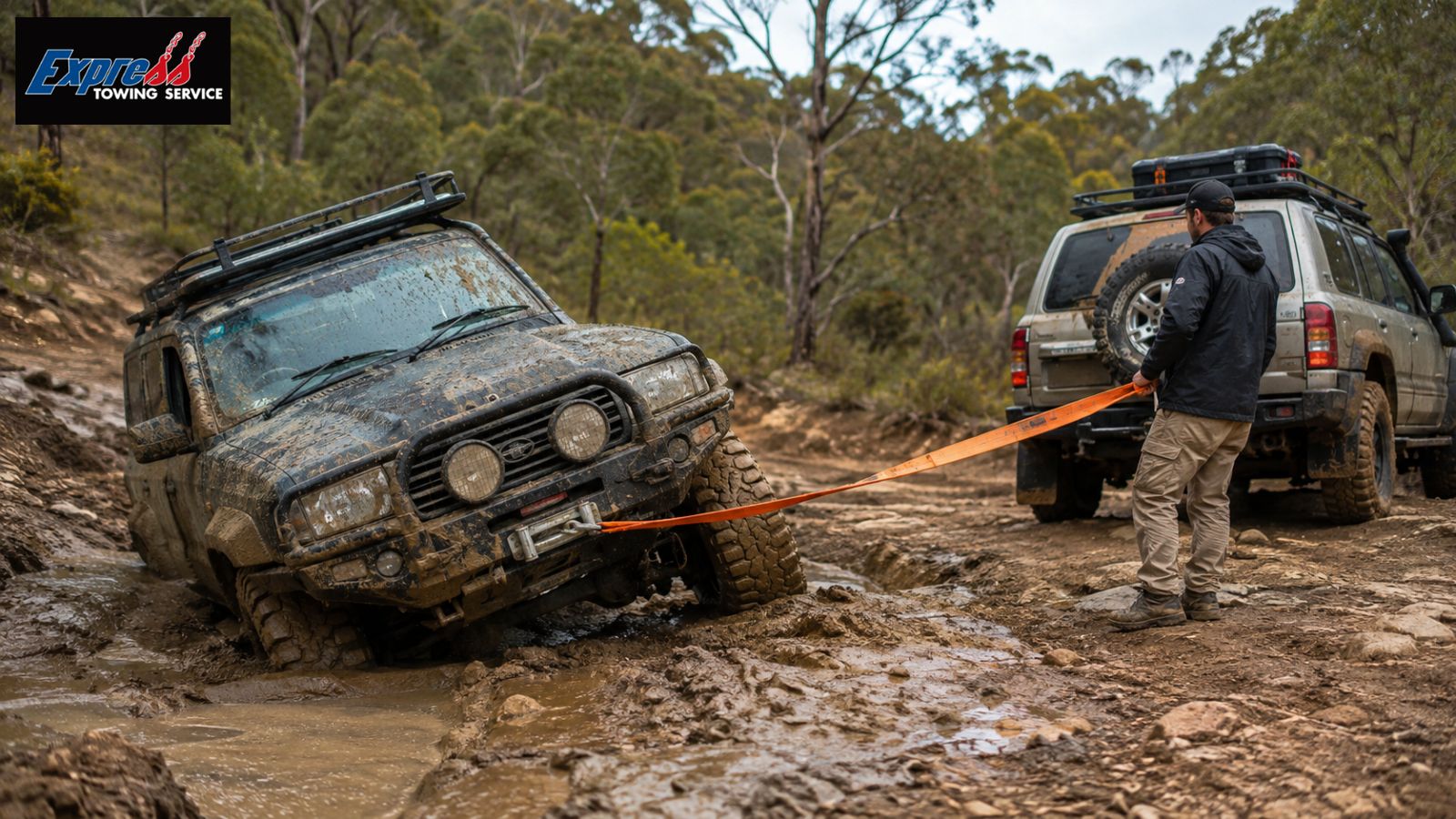
When you drive off-road, it becomes exciting. You can explore beaches, forests, and mountains. But rough ground can become an obstacle. A vehicle can get stuck in mud or water within seconds
Many drivers try to free the vehicle themselves. But sometimes it makes the situation worse. Spinning the tyres without knowledge can dig the vehicle deeper into the mud.
This is why professional off-road vehicle recovery is important. Recovery experts follow the correct off-road vehicle recovery process.
Imagine a bunch of mates traveling through a forest after a rainy day. One vehicle gets stuck in mud. The wheels spin, but the vehicle gets stuck deeper and deeper. Rather than using another vehicle to tow it out, they get a professional winching service. The vehicle recovers safely, and the journey goes on without any costly repairs.
The Australian Automobile Association (AAA) reports that each year there are thousands of roadside or off-road assistance calls. This is because of a stuck or immobile vehicle. Recovery experts also say that mud, sand, and steep tracks are causes.
The professionals always use the right equipment. They choose the safest winch out process. The team follows proven mud recovery steps. Their goal is to recover the vehicle safely while preventing further damage.
Off-road driving is different from driving on normal roads. The ground changes all the time. A track that looks safe may hide deep mud, soft sand, loose rocks, or water underneath.
A proper off-road vehicle recovery helps:
The professionals in a recovery team are trained on the right recovery methods for any situation.
Off-road vehicle recovery is the safe process of removing a vehicle that cannot move because it is stuck or trapped.
Recovery may be needed when a vehicle is stuck in:
Weather, road conditions, and simple mistakes are among the major causes why vehicles get stuck.
| Situation | What Happens |
| Deep mud | Tyres lose grip and sink. |
| Soft sand | Wheels dig deeper instead of moving forward. |
| Heavy rain | Tracks become slippery. |
| Loose rocks | Tyres cannot grip the surface. |
| Water crossings | The vehicle may lose traction or stall. |
| Steep hills | The vehicle may slide or become trapped. |
Using the right tools makes recovery safer and reduces damage to the vehicle.
| Equipment | Purpose |
| Recovery winch | Pulls the vehicle to firm ground. |
| Recovery straps | Help pull stuck vehicles safely. |
| Recovery boards | Give tyres extra grip in mud or sand. |
| Shackles | Connect recovery equipment securely. |
| Snatch blocks | Change the pulling direction and increase pulling power. |
| Air compressor | Adjusts tyre pressure after recovery. |
Every stuck vehicle cannot be recovered yourself. Such problems need experts for winching services. The tyres spin, but the vehicle does not move. This means there is very little grip. The vehicle is leaning on one side. Trying to pull it incorrectly may cause it to roll over.
The recovery point is damaged or missing. Using the wrong attachment point can damage the vehicle. The ground is too wet, steep, or unsafe to recover the vehicle yourself.
Calling professionals early is often faster, safer, and less expensive than repairing damage caused by an unsafe recovery attempt.
Many people believe that any four-wheel drive can pull out another vehicle. This is not always true. A poor recovery can damage both vehicles. Recovery straps can snap. Incorrect towing points can break. People standing nearby can also be injured. Professional recovery operators understand towing safety and follow safe recovery procedures.
They carefully inspect:
There are steps that need to be followed during the vehicle recovery process.
The off-road vehicle recovery process includes checking the entire scene. The team checks:
For example, a vehicle stuck in soft beach sand needs a different recovery plan than one trapped in thick bush mud.
Safety is always important. The recovery team asks everyone to move away from the vehicle and recovery equipment. The team also checks for:
The towing safety concerns protect both the recovery team and the vehicle owner.
After inspecting the situation, the recovery operator decides which method will work best. The choice depends on where the vehicle is stuck.
| Situation | Recovery Method |
| Deep mud | Winching service |
| Soft sand | Recovery boards and tyre pressure adjustment |
| Steep slope | Controlled winching |
| Rocky track | Slow vehicle recovery with recovery straps |
| Flooded area | Professional towing or winching |
The winch out process uses a strong steel cable or synthetic rope to pull the vehicle slowly onto firm ground. The operator first finds a strong anchor point.
This could be:
The winch cable is attached to the correct recovery point on the stuck vehicle. The pull is slow and controlled. The operator watches the cable, tyres, and vehicle throughout the recovery. If the vehicle starts moving in the wrong direction, the recovery stops immediately, and the setup is adjusted.
Mud sometimes presents obstacles. That’s why people need off-road recovery. Many drivers make the mistake of pressing the accelerator harder. This usually causes the tyres to spin and sink even deeper.
Professional mud recovery steps include:
Recovery does not end when the vehicle is free. The recovery team carries out a final inspection before the journey continues.
They check:
It can happen to any driver, even those who have some experience, because of the different factors such as mud, sand, tough tracks, and gravel. Fortunately, a proper off-road vehicle recovery process will help to get the vehicle moving again.
A rescue team knows what tools and techniques should be applied to every specific case. They follow the mud recovery steps, apply the right technique for winching out the car, and put safety during towing first. It guarantees that your vehicle will not be damaged and nobody will be harmed.
When your vehicle gets stuck, do not spin your tires or use inappropriate ways of recovery. Contacting a professional tow truck service earlier will help you to avoid expenses on repairing your car. To know about the complete winch out process, get in touch with Express Towing.
The off-road vehicle recovery procedure involves assessing the situation. It involves ensuring the site is safe. The team determines the recovery method, recovers the car, and checks it before driving.
You should contact a professional winching team when your car is stuck in deep mud, soft sand, on a steep slope, and when moving it could result in further damage.
Steps which ensure safe recovery of a car from the mud involve stopping wheel spin, evaluating the soil, decreasing tyre pressure (if possible), placing recovery boards, and performing winch recovery when necessary.
If the procedure for recovery is not complicated, then it is possible. Otherwise, you had better leave it to the professionals in order to avoid any possible vehicle damage.
Proper towing guarantees your safety, prevents the recovery tools from breaking, and reduces the risks of vehicle damage.


