

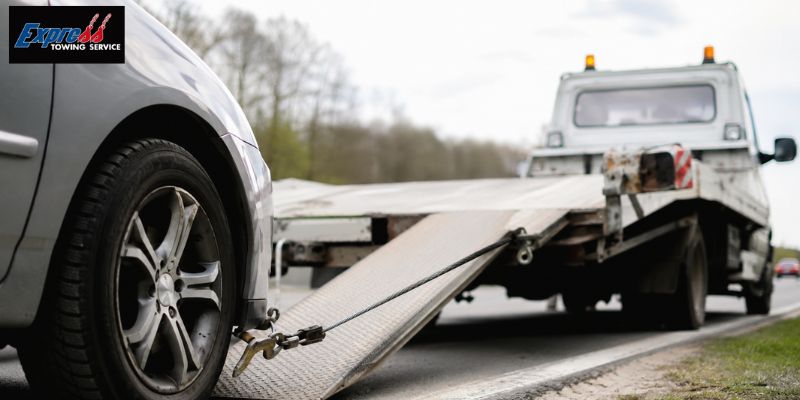
It all starts with what looks like an innocent shortcut. The driver of a family car that has been traveling through a regional park on a rainy day takes an unsealed road in order to get to a picturesque viewpoint. The first thing that happens is that the wheels start slipping into the muddy ground. Pushing the gas pedal even deeper causes additional problems. In the end, the car is stuck with no chance of getting out.
Unfortunately, such situations occur more frequently than the majority of drivers know. When the vehicle gets trapped in the sand, mud, snow, or roadside ditch after losing control, regular towing will not be the solution. In these instances, winching by professionals becomes one of the most secure and efficient ways of recovery.
Understanding what is winching in towing can help people realize the reason behind the use of special equipment during recovery operations instead of a simple tow rope. It can help protect the vehicle from possible damage and ensure additional safety for drivers, passengers, and recovery experts. For off-road recovery of your vehicle, you need to follow this blog discussing winch out service explained.
In essence, winching towing is the technique that involves the use of a winch and a powerful mechanical system for moving an immobilized vehicle to a place of stability and safety. Unlike dragging, winching towing involves slow but steady pulling of the vehicle with the use of steel cables.
The winch can be fitted to the recovery truck or vehicle specially designed for recovering vehicles. The cables are attached to the approved recovery points of the immobilized vehicle, and the force of recovery is controlled with special equipment. Unlike towing, where the wheels are free to move, winching towing involves vehicles whose wheels are stuck in the ground. This is the reason why many roadside assistance services offer winch out service explained separately from towing.
Every rescue operation has its individual characteristics, but the winching process is still structured. The recovery operator first assesses the situation by examining the vehicle’s position, surrounding terrain, ground stability, and potential hazards. They then identify appropriate recovery points on both the stranded vehicle and the recovery truck.
Once the winch cable has been securely connected, the operator slowly applies tension while continuously monitoring the vehicle’s movement. In some situations, recovery boards, wheel chocks, or additional anchoring equipment may also be used to improve stability during the recovery.
The goal is not simply to pull the vehicle free as quickly as possible. Instead, experienced operators focus on maintaining complete control throughout the process to minimise stress on the vehicle’s suspension, steering, drivetrain, and bodywork.
While many motorists believe that recovery will be required in the aftermath of an accident, the truth is that professional motor vehicle recovery uses winching for a variety of situations.
Perhaps one of the most frequent examples is when a vehicle gets stuck in mud due to soft terrain after heavy rainfall. Parks, camping sites, construction sites, and rural areas often provide circumstances where tyres lose traction and get bogged in mud.
Another situation where winching is often employed is where vehicles have driven along the beach. There are various locations in Australia where four-wheel drives are allowed, but even experienced motorists might end up being trapped in sand due to tide times and pressure in their tyres.
In winter months, cold weather could cause vehicles to slip into ditches or get stuck at the top of icy slopes that can only be recovered by winching. In some cases, vehicles in urban environments may need winching in the event of them getting stuck in drainage, embankments, or roadside slopes.
Despite being frequently confused with each other, winching and towing are two entirely distinct operations. Conventional towing is meant for vehicles that can still move on their own using their wheels. The tow truck needs to hoist or secure the vehicle to take it somewhere else. But in the case of winching within towing, it’s more about retrieving the vehicle from a tricky situation in order to perform conventional towing.
Consider a situation where a delivery van becomes trapped in a mud hole at some construction site. You can’t just hook up the truck and drive off, as the vehicle is stuck with its wheels buried under the mud. The first step to undertake would be a controlled winching process to bring the van back onto firm ground. And once that’s done, it can be towed if needed. This is the reason why professional car recovery companies are equipped not only with towing but also winching devices.
Take the case of a contractor driving to a remote location due to several days of continuous rain and sinking into the muddy ground on an unsealed road when driving into it using a utility vehicle to the point where all four wheels become stuck. Accelerating makes the vehicle sink into the surface further without any effect.
A vehicle recovery service with a recovery truck that contains a winch arrives and, after assessing the situation on the ground, attaches the cable of the winch to the specified recovery points from the manufacturer and pulls out the vehicle.
All of this takes less than thirty minutes without causing any damage to the vehicle because of the careful process of the procedure. In the case of trying to recover the vehicle with another vehicle using a normal tow rope, there would be a higher probability of damaging the vehicle and injuring people.
Due to the increased number of people visiting Australian beaches, national parks, farms and remote areas, there is an increased need for professional off-road vehicle recovery services. Professional winching and towing have evolved into one of the safest and most effective recovery techniques because it prioritises controlled movement over brute force. Whether recovering a family vehicle from soft sand, extracting a delivery van from deep mud, or assisting motorists stranded in roadside ditches, winching provides a reliable solution when conventional towing simply isn’t enough.
Understanding what winching is in towing helps drivers recognise that vehicle recovery is about much more than pulling a vehicle—it is a carefully planned process that combines specialised equipment, technical knowledge, and safety-focused techniques to return vehicles to the road with minimal risk.
Winches come in different sizes based on different applications. Professional vehicle recovery companies use varied winching systems based on the size and weight of the car to be recovered as well as the location of that vehicle.
Hydraulic winches are installed in heavy-duty recovery trucks since they have steady pull power and can run continuously for long durations of time. Hydraulic winches work best when used to recover buses, trucks, and commercial vehicles from hard terrain.
Electric winches work well with four-wheel drive and light recovery vehicles. Electric winches work using power provided by the vehicle’s battery and work best with vehicles trapped in mud, sand, and snow.
Recovery companies now prefer using synthetic winch ropes rather than steel cables when performing recovery operations. While synthetic ropes are lighter and easier to manage as well as safer compared to steel cables, since they contain less kinetic energy when broken, the latter works well with heavy commercial recoveries owing to their strength. It all depends on the recovery itself. That is why winching services providers need to do a thorough assessment of the situation before they start the operation.
As the winch out service is explained here, this will be of great help for you. Knowing what is winching in towing enables drivers to understand why this technique is considered the most important for vehicle recovery. Winching refers to the towing of a vehicle that is not capable of moving due to being bogged in mud, sand, snow, or any other challenging terrain. In contrast to regular towing, where the vehicle is towed by means of moving it quickly from one place to another, winching is based on a controlled force application. Therefore, professional winching services provide towing of the vehicles without causing additional damage and without danger to the person performing the procedure.
Should the driver find themselves bogged on an off-road track or the vehicle be stuck in the ditch next to the roadside, it is advisable to contact off-road recovery specialists, who will perform the recovery operation properly and in a quick manner. Next time someone wonders what winching is in towing, they will learn that it is a specific process that requires professional skills and special equipment. Express Towing Services uses different towing methods that you can employ to winch your vehicle.
Winching in towing refers to a recovery process that employs a winch system that consists of a motor-powered winch and cable/rope to slowly move the immobile vehicle to a safe area before towing it.
Winching is required when a vehicle is immobile due to being stuck in mud, sand, snow, a roadside trench, or anywhere where regular towing cannot be conducted.
Yes. While towing is done on mobile cars, winching involves moving an immobile vehicle out of a difficult situation such as being stuck in mud.
No. Winching requires special equipment and a person who knows how to conduct vehicle recovery.
In many situations, no. Improper recovery methods can damage vehicles and create serious safety hazards. Professional recovery is generally the safest option.


