
In the event of a car accident, confusion may set in as to what should be done next. The car could be damaged and might not function. Furthermore, the car could be in an unsafe situation.
First of all, ensure that it is safe for you and others around. You should check if there is any injury either to yourself or to those who are around. In case of injuries, you should move to a safe place and contact the emergency accident towing service.
Once it is certain that the situation is under control, an affordable accident tow and recovery service would be required. An accident towing vehicle will take care of the situation of removing the damaged car out of the area of the accident. Also, it is useful when the vehicle becomes immovable and cannot be driven.
This guide will give you all the information on how and when to call a tow truck for an accident on the highway.
An emergency accident towing service helps move vehicles after crashes and other serious road incidents.
The service may include:
The right service depends on the vehicle and crash location. A badly damaged car may need different equipment from a vehicle with minor damage.
Do not focus on towing before checking for immediate danger.
If possible:
If you smell fuel, see fire, or notice another serious hazard, move away from the vehicle and seek emergency help. A towing company does not replace police, fire, or medical services.
You may need towing when your vehicle cannot continue safely.
Common situations include:
If you are unsure whether the vehicle remains safe to drive, do not take unnecessary risks. A qualified professional can assess the situation and explain the available towing options.
A crash can damage important mechanical parts. The vehicle may not start. It may also have a damaged wheel or suspension. In such cases, towing is an option. One must avoid attempting to drive a badly damaged car solely because its engine is working. There could be severe damage to the car even though it seems like one can drive it.
A vehicle stopped on a highway can create a serious traffic hazard. You may need a tow truck for accident on highway service when the vehicle cannot move safely.
Highway traffic can approach at high speed. Staying by the side of an injured car can also put you at risk. Afterwards, arrange for towing as appropriate.
Look for obvious damage.
This can include:
Do not assume that small-looking damage means the vehicle remains safe. A professional inspection may be needed before you drive again.
Airbag deployment often happens during significant crashes. The vehicle may also have other safety system damage. Even if the engine starts, avoid driving the vehicle until a qualified professional checks it. A tow can take the vehicle to a repair facility for inspection.
After some crashes, authorities may require vehicles to leave the road. Follow instructions from the relevant authorities. A towing company can then move the vehicle to an appropriate location. The exact process depends on the accident location and local rules.
Fluid leaking from a damaged vehicle can signal a serious problem.
It may involve:
Do not tamper with unknown liquids. A towing truck can take the car away for proper examination.
The fact that an engine is still running does not necessarily imply safety in driving the vehicle.
After a crash, damage can affect:
If you have any doubt, arrange a professional assessment. The cost of a tow may be easier to manage than the risks of driving a damaged vehicle.
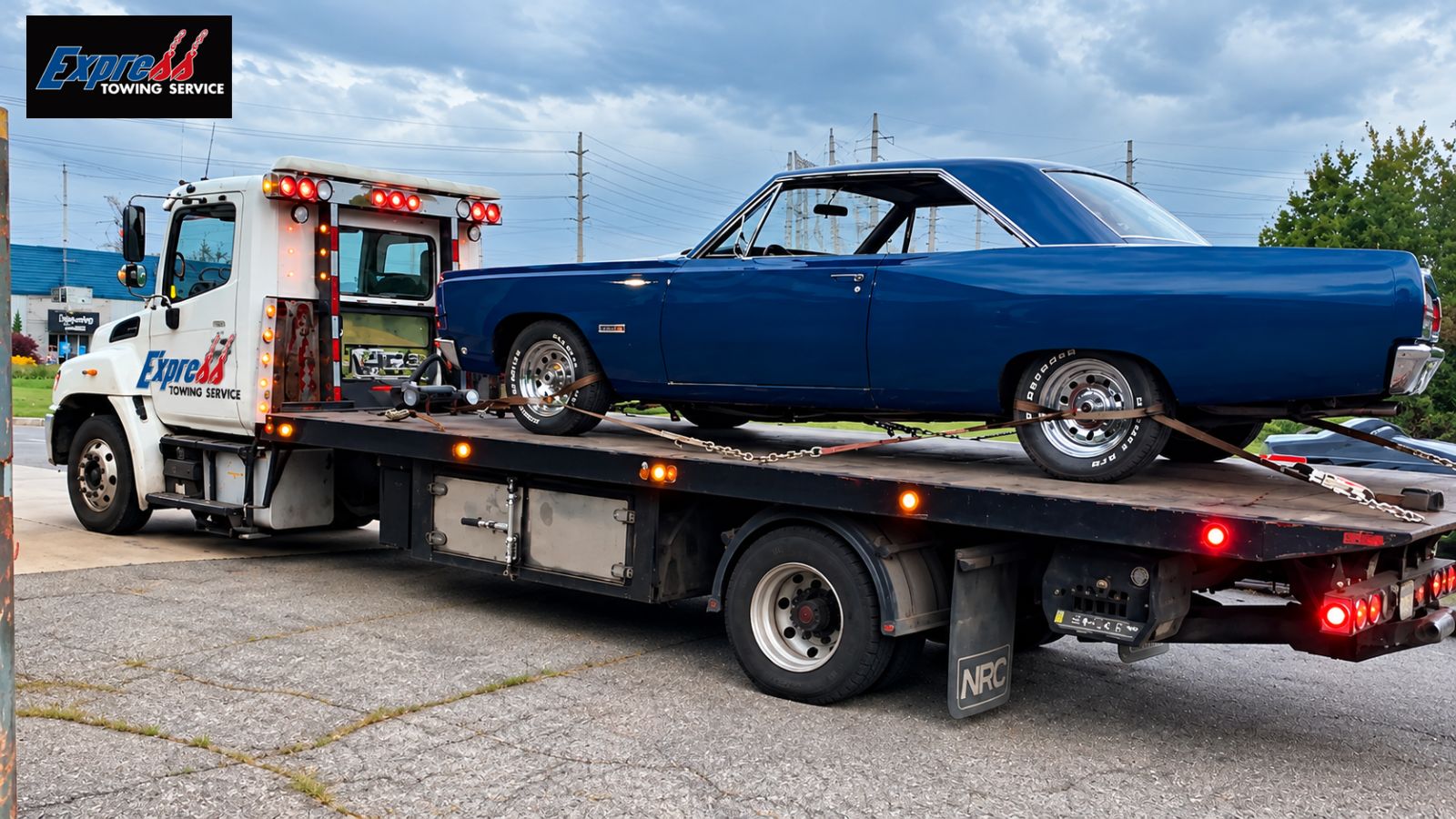
Not every tow truck suits every accident. A heavily damaged vehicle may need a flatbed truck. A vehicle with wheel damage may need specialized recovery equipment.
Before the truck arrives, tell the provider:
This information helps the towing company choose suitable equipment.
Some insurers have towing providers or approved networks. Insurance approved towing in Canada can refer to towing services that meet an insurer’s requirements or work within an insurer’s claims process. However, coverage differs between policies.
Before agreeing to a tow, ask your insurer or roadside assistance provider:
The price can vary widely.
Factors may include:
| Factor | Why It Matters |
| Distance | Longer towing can cost more |
| Vehicle size | Larger vehicles may need special equipment |
| Damage | Severe damage can require recovery equipment |
| Location | Highway recovery may need extra planning |
| Time | Some providers charge different rates after hours |
| Storage | Extra fees may apply if the vehicle stays at a yard |
| Recovery work | Difficult recovery can require more equipment |
Ask for pricing information before the tow when the situation allows. In an emergency, safety should remain the first priority.
People often search for affordable accident tow and recovery after a crash. The cheapest option is not always the most suitable. The towing provider needs the right equipment for the vehicle. For example, choosing a basic tow when a damaged vehicle needs specialized recovery could create additional problems. Instead, compare the service details.
Ask about:
Clear pricing can reduce surprises later.
Good information can help the provider prepare.
Give them:
If the vehicle is safe to enter, collect important personal items.
These may include:
Do not return to the vehicle if the location remains dangerous. Your safety matters more than personal belongings. At Express Towing Services, we care about your safety.
If it is safe, take clear photographs of the vehicle.
You may want images of:
Photos can help document the condition of the vehicle. Follow any instructions from police or your insurer about accident documentation.
You may have several options.
The vehicle could go to:
If you are dealing with insurance, ask about insurance approved towing in Canada and check what your policy covers. If you are making an insurance claim, check with your insurer before choosing a repair facility when possible.
Once the vehicle reaches its destination, it may need a full inspection. A qualified mechanic can check areas that may not show obvious external damage.
The inspection may cover:
A few simple steps can make the process easier.
Ask for the company name and driver details.
Make sure you know where the vehicle will go.
Ask whether recovery, storage, or after-hours charges apply.
Save receipts, photographs, towing details, and insurance information.
Police, insurers, and road authorities may have specific procedures after an accident.
A car crash can put you into shock and stress. Knowing how to request an accident towing service can help. Emergency accident towing service should be requested when the vehicle is unsafe to drive, severely damaged, blocking traffic, or requires specialized transport.
An affordable accident tow and recovery on the highway would be necessary when the damaged vehicle becomes a danger on the road. Provide detailed information about your vehicle and crash site before the towing. Ask about the equipment, destination, and expected charges.
The most important thing is to always keep safety at the top of mind. Never risk driving a potentially damaged vehicle just to avoid a towing fee. Better to err on the side of caution and have the vehicle professionally checked out. The tow truck for accident on highway service from Express Towing Services can help you during odd hours.
If your vehicle cannot move safely, is damaged, is obstructing traffic flow, or requires professional recovery, you should contact us.
Yes, as long as the vehicle is still drivable and not in violation of any regulations. If there are any issues with steering, brakes, wheels, tires, fluids, or safety systems, contact a professional for further inspections.
Give your location, vehicle type, visible damage, road conditions, and whether the vehicle starts or can move.
Some policies cover towing, but coverage varies. Check your policy or contact your insurer before accepting non-emergency charges when possible.
Yes. Towing providers may offer highway accident recovery. Tell the provider that the vehicle is on a highway so they can send suitable equipment.


