
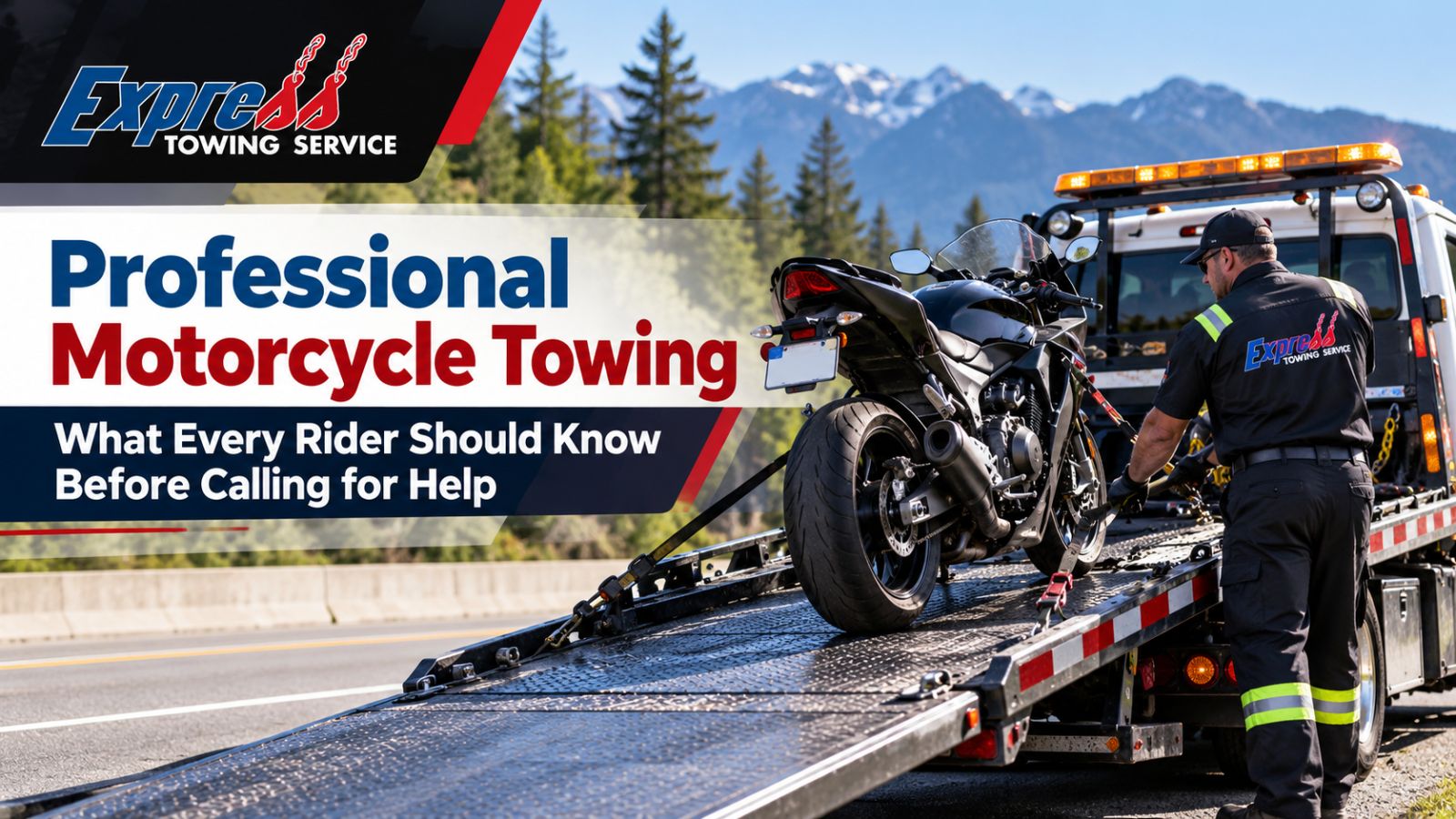
A motorcycle breakdown can happen when you least expect it. A flat tyre on a quiet road, an engine that refuses to start, or a mechanical failure during a long ride can quickly turn an enjoyable journey into a stressful situation. Unlike cars, motorcycles require careful handling during transport because their balance, bodywork, suspension and exposed components can be damaged by incorrect loading or securing.
Choosing professional motorcycle towing helps riders arrange suitable transport when riding the motorcycle is no longer safe or possible. Understanding how towing works, what information to provide and how to prepare your bike can make the process smoother. This guide explains the essential considerations every rider should know before requesting assistance, whether the problem occurs close to home or during a longer journey.
Motorcycles are not simply smaller versions of cars when it comes to recovery. Their two-wheel design, relatively narrow contact points and different weight distribution require appropriate loading equipment and securement methods. A motorcycle that is not properly supported can shift during transport, potentially damaging its handlebars, fairings, mirrors, suspension or other components.
Professional motorcycle transport should account for the bike’s weight, dimensions, ground clearance and mechanical condition. A lightweight commuter motorcycle may be straightforward to load, while a heavy touring motorcycle or a low-clearance sports bike may require additional care and suitable equipment.
Not every motorcycle problem requires a tow. A minor issue may be resolved safely at the roadside, but certain situations make continued riding unwise.
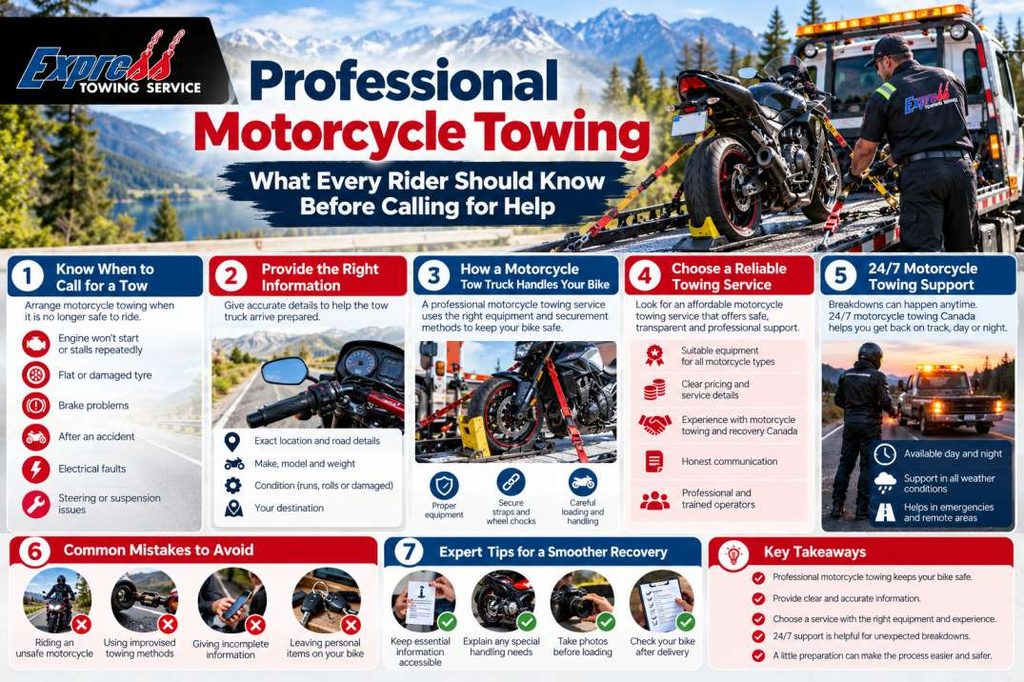
Consider arranging recovery when:
For example, if a rider experiences a sudden loss of braking performance on a busy road, continuing to a nearby workshop may create unnecessary risk. Moving to a safe location and arranging appropriate recovery is the more sensible option.
Roadside recovery requirements can vary according to the location, weather, road conditions and type of motorcycle involved. The broader concept of motorcycle towing and recovery Canada includes transporting motorcycles after mechanical failures, collisions, tyre problems and other incidents that prevent safe travel.
A suitable recovery arrangement begins with understanding the problem rather than immediately attempting to move the bike. The operator needs to know whether the motorcycle can roll, whether its steering works, whether the wheels are locked and whether it has suffered accident damage.
Roadside assistance may involve troubleshooting a battery problem, helping with a minor issue or arranging other support. Towing focuses on moving the motorcycle to a suitable destination when it cannot be ridden safely.
Some providers offer both services, while others specialise in transport and recovery. Before confirming an arrangement, explain the symptoms and ask what assistance is included.
For example, a motorcycle with a flat battery might only need a suitable jump-start procedure if the battery and electrical system are otherwise healthy. However, a bike with damaged wiring or a burning smell should not automatically be jump-started. Describing the symptoms accurately helps the operator determine the appropriate response.
Clear information helps the operator prepare the right vehicle, equipment and loading approach. A motorcycle that can roll freely presents different handling requirements from one with a seized engine, locked rear wheel or damaged front suspension.
When requesting help, provide the following details.
Give the road name, nearest intersection, kilometre marker or a recognisable landmark. If you are on a highway, identify the direction of travel and the nearest exit where possible. Accurate location details reduce confusion and help the operator find a safe access point.
If you are stopped in a dangerous position, explain that immediately. Do not stand in a traffic lane or attempt to direct traffic yourself. Move to a safer location if possible without crossing moving traffic or exposing yourself to additional danger.
Tell the operator the motorcycle’s make, model and approximate weight if known. Mention whether it is a sports bike, cruiser, touring motorcycle, scooter or another type.
Also explain whether the motorcycle:
These details help the operator plan how to load and secure the motorcycle without putting unnecessary pressure on vulnerable parts.
Confirm where the motorcycle needs to go. This may be your home, a repair workshop, a dealership or another secure location.
If the destination is a workshop, check its opening hours and whether someone can receive the motorcycle. If it is closed, ask about suitable alternatives and any arrangements for unloading or storage.
The quality of motorcycle transport depends on suitable equipment, careful loading and securement throughout the journey. A professional approach should consider both the motorcycle’s condition and the safety of the people handling it.
Not every tow truck is equally suitable for every motorcycle. Depending on the bike and recovery circumstances, appropriate equipment may include a motorcycle trailer, a vehicle with a suitable loading platform, a loading ramp, wheel chocks and rated tie-down straps.
The operator should select equipment capable of supporting the motorcycle’s weight and dimensions. Low sports bikes may need a suitable ramp angle to avoid scraping the underside, while heavy touring motorcycles can require additional assistance during loading.
A suitable setup also needs secure anchor points and a stable loading surface. Improvised straps or unsuitable attachment points can damage the motorcycle or allow it to move during transport.
A motorcycle must remain stable throughout the journey. Securement methods should suit its design and the equipment being used.
Appropriate practices generally include:
Handlebars, brake lines, plastic fairings and other vulnerable parts should not be treated as convenient attachment points. Incorrect restraint can cause damage even when the motorcycle appears stable at first.
Where it is safe and practical, take photographs of the motorcycle before it is loaded. Capture existing scratches, damaged panels, the wheels and the general condition of the bike.
If the motorcycle has been involved in an accident, avoid moving damaged components merely to obtain photographs. The operator should assess whether it can be handled safely.
A basic condition record can help clarify the motorcycle’s state before transport and identify any damage that may have occurred during handling.
An affordable motorcycle towing service should provide a suitable transport arrangement, clear communication and an understandable explanation of the work involved. The lowest advertised charge does not necessarily represent the full cost or the most appropriate service for a particular motorcycle.
Before confirming a booking, ask what the quoted amount covers, including the collection location, destination, loading requirements and any additional handling. Clarify whether the estimate may change if the motorcycle cannot roll, has a locked wheel or requires special recovery equipment.
A few direct questions can help you make an informed decision:
Ask for the agreed arrangements in writing where practical. Clear expectations can prevent misunderstandings during a stressful roadside situation.
An affordable service should be assessed by its suitability, transparency and ability to handle the motorcycle safely, not solely by the initial estimate.
Motorcycle problems do not always occur during ordinary business hours. A breakdown may happen late at night, early in the morning or during a long weekend, when nearby workshops are closed.
Searching for 24/7 motorcycle towing Canada can help riders identify providers that advertise around-the-clock recovery. However, 24-hour availability does not always mean an operator can reach every location immediately. Response times may depend on distance, weather, traffic, current demand and the equipment required.
When contacting a provider, explain your location and ask whether assistance is available at that time. Request an estimated arrival window rather than assuming a particular response time.
If the motorcycle is on a remote road or in difficult weather, ask whether the operator can safely access the location. If immediate recovery is not possible, discuss the safest available waiting arrangements.
For overnight breakdowns, personal safety should remain the priority. Use hazard lights if appropriate, remain visible without standing near moving traffic, and follow local road-safety guidance. If the motorcycle is in a dangerous position or there is an immediate threat to life, contact the relevant emergency services.
A breakdown can encourage rushed decisions, but several common mistakes can increase the risk of injury or motorcycle damage.
A bike that still starts may not be safe to ride. Damaged brakes, bent wheels, steering faults or leaking fluids can make handling unpredictable. Do not assume a motorcycle is roadworthy simply because the engine runs.
Pulling a motorcycle behind another vehicle using an ordinary rope or unsuitable strap is dangerous. A motorcycle needs appropriate support and securement, and improvised methods can cause loss of control or damage. Use a suitable recovery service instead.
Failing to mention a locked wheel, low ground clearance or accident damage may result in unsuitable equipment being dispatched. Explain the motorcycle’s condition as accurately as possible, even if you are uncertain about the exact mechanical fault.
Before transport, remove loose personal items and secure detachable accessories where safe. Keep the keys available if the operator needs them to move or load the motorcycle. Do not attempt to retrieve items from a motorcycle positioned in a hazardous location.
Preparation can make roadside recovery more straightforward, even if you cannot predict when a breakdown will occur.
Store your motorcycle’s registration details, insurance information and emergency contacts somewhere accessible. Knowing the model and approximate weight can also help when arranging transport. Avoid sharing unnecessary personal information over unsecured channels.
Some motorcycles have special considerations, including shaft drives, unusual frame designs, extensive fairings, luggage systems or manufacturer-specific transport guidance. If you know of any restrictions, mention them before loading begins.
For example, a low-clearance sports motorcycle may need a shallow loading ramp, while a heavy touring bike with luggage may require additional support during positioning. Explaining these features early helps the operator plan the recovery.
Once the bike has been unloaded in a safe location, inspect its visible condition. Check the bodywork, mirrors, wheels and other accessible components, and compare them with photographs taken before loading.
If you notice new damage, document it promptly and raise the issue with the provider. If the motorcycle was recovered after a mechanical failure or collision, arrange a suitable inspection before riding it again.
When a motorcycle becomes unsafe to ride, having a clear recovery plan can reduce uncertainty. Express Towing Services can be considered when exploring towing options, with the motorcycle’s condition, collection location and destination explained before arrangements are confirmed.
Before booking, discuss the equipment required, the proposed handling method and the expected transport arrangements. Confirm the scope of service and any applicable charges so you understand what to expect. The right approach depends on the motorcycle and the circumstances of the breakdown, rather than a single recovery method being suitable for every situation.
A motorcycle breakdown can be stressful, but understanding the recovery process helps you make safer decisions. Knowing when to stop riding, what information to provide and how appropriate loading and securement work can protect both you and your motorcycle.
Professional Motorcycle Towing should prioritise suitable equipment, careful handling, clear communication and transparent arrangements. Whether you experience a flat tyre, a mechanical fault or an accident, taking a moment to assess the situation and arrange appropriate assistance can help prevent further problems.
Keep essential motorcycle details accessible, choose a recovery arrangement suited to your bike and inspect it after delivery. When the unexpected happens, a calm and informed approach makes roadside recovery easier to manage.
Arrange towing if the motorcycle has damaged brakes, a compromised tyre, steering problems, a leaking fluid system, accident damage or a fault that makes its behaviour unpredictable. An engine that starts does not guarantee that the bike is safe to ride. If you are uncertain about its roadworthiness, move to a safe location and seek suitable assistance rather than risking a further breakdown or loss of control.
Yes, provided the vehicle and equipment are suitable for the motorcycle’s weight, dimensions and design. Sports bikes may require careful attention to ground clearance and bodywork, while heavy touring motorcycles can need additional support during loading. Tell the operator the exact model, whether the wheels roll freely and whether any components are damaged. This information helps determine the appropriate loading and securement method.
Some providers advertise 24-hour motorcycle recovery, but availability depends on the location, staffing, weather and equipment requirements. Confirm that the provider can attend your particular location and ask for an estimated arrival window. If you are stranded near moving traffic, prioritise your personal safety while waiting and contact emergency services if the situation presents an immediate danger.
If it is safe, photograph the motorcycle’s existing condition, gather the keys and remove loose belongings. Tell the operator about any locked wheels, damaged steering, fluid leaks, low ground clearance or unusual transport requirements. Do not attempt to move a badly damaged motorcycle simply to make loading easier. The recovery operator should determine how to handle the bike safely based on its condition.
Inspect the visible bodywork, mirrors, wheels and other accessible components, comparing them with any photographs taken before collection. Report suspected transport damage promptly and retain relevant records. If the motorcycle was recovered after a collision or a serious mechanical failure, have it inspected by a qualified motorcycle technician before riding. Some damage, particularly to steering, suspension or structural components, may not be obvious during a quick visual check.


