
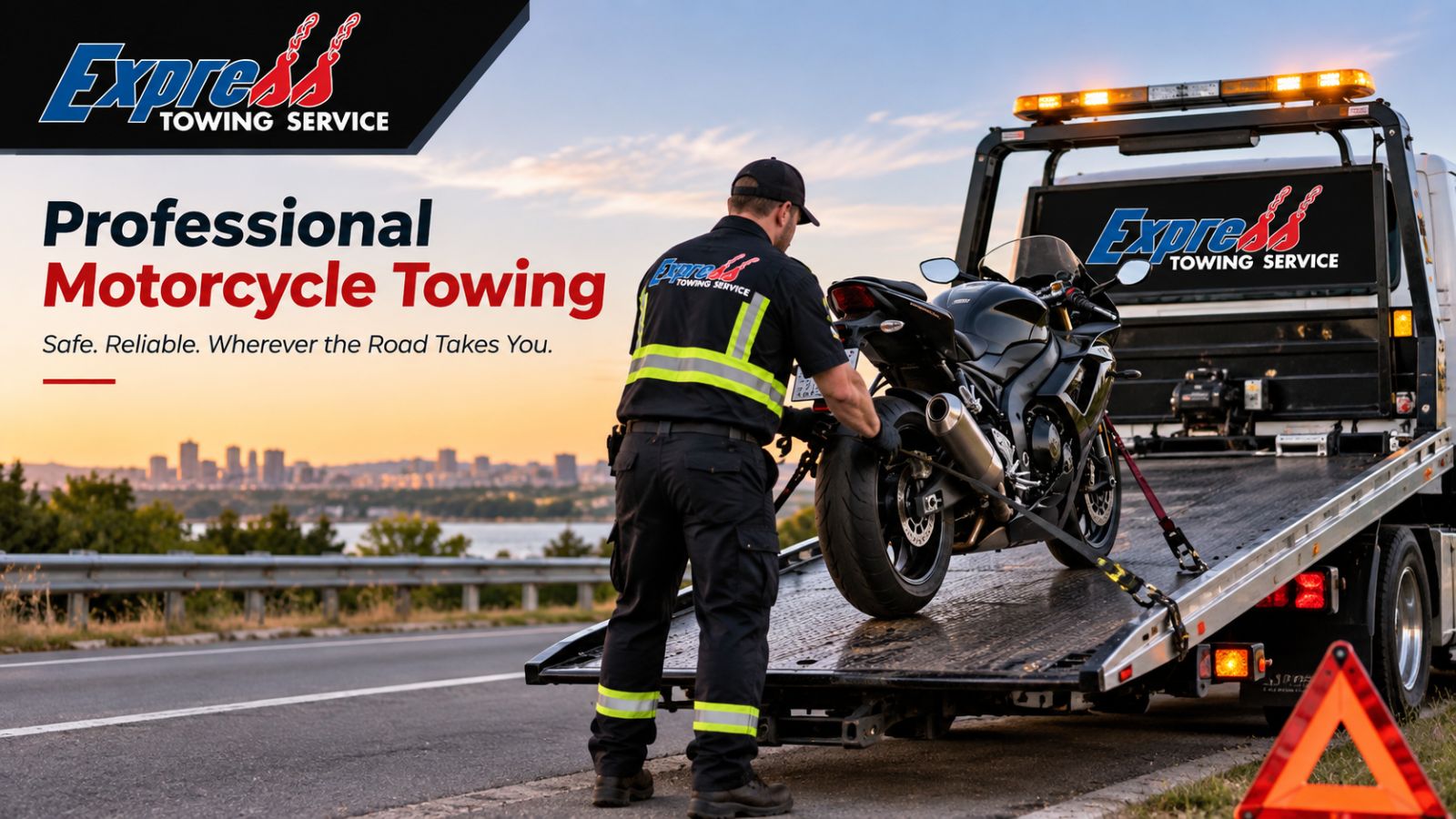
A motorcycle breakdown can turn a normal ride into a stressful situation within minutes. One moment you are enjoying the road, and the next the engine refuses to start, a tyre loses pressure, or an electrical problem leaves you sitting on the shoulder. The first reaction is often to try fixing the bike immediately. That is not always the safest choice. If you are stopped near fast-moving traffic, on a narrow shoulder, or somewhere with poor visibility, getting yourself out of danger matters more than diagnosing the motorcycle. Knowing how professional motorcycle towing works can make the situation much easier to manage. The right recovery approach protects the rider, prevents further damage to the motorcycle and gets the bike to a suitable destination without unnecessary delay.
The first thing to remember is not to panic. If the motorcycle can still move safely, get it as far away from moving traffic as practical. Turn on hazard lighting if your motorcycle has it and use appropriate warning equipment when safe to do so.
Then assess the situation from a safe position.
If you are dealing with smoke, leaking fuel, a crash, damaged brakes or another potentially dangerous problem, do not keep trying to ride. Move away from the motorcycle if necessary and contact emergency services when there is an immediate safety risk.
For a routine mechanical failure, contact a roadside provider and explain exactly where you are.
Useful information includes:
This information helps the operator send suitable equipment rather than treating the call like an ordinary car tow.
A motorcycle is lighter and narrower than a car, but that does not mean it can simply be loaded onto any available truck.
The bike has exposed components, two wheels and a different centre of gravity. Incorrect loading or poor restraint can result in scratches, damaged controls, bent components or even movement during transportation.
A proper recovery should consider the motorcycle’s condition before loading it.
For example, a bike with a locked front wheel cannot be handled in exactly the same way as one that rolls freely. A damaged motorcycle after a collision may also need additional care because steering, suspension or wheels could be compromised.
This is one reason Express Towing Services should be contacted with accurate information.
Tell the operator what has happened. If the motorcycle has fallen over, been involved in a collision or cannot roll normally, mention that before the truck arrives.
When the operator arrives, give them a few moments to assess the motorcycle.
The recovery process may involve positioning the motorcycle carefully, securing it at appropriate points and checking that it remains stable during transportation. The exact method depends on the equipment available and the motorcycle’s condition.
Do not be surprised if the operator asks questions before moving the bike.
They may want to know whether:
Those questions are practical, not unnecessary.
A professional recovery operator needs to understand the motorcycle before deciding how to move it safely.
There is a difference between a motorcycle that has stopped running and one that should not be ridden.
A flat battery may be frustrating but could potentially have a straightforward solution. A damaged brake system, broken control, serious tyre issue or collision damage is another matter.
Trying to ride a motorcycle that has a safety-critical fault can turn a breakdown into an accident.
This is particularly important after a minor collision. A motorcycle can appear visually acceptable while having damage that affects steering, suspension, braking or wheel alignment.
Transport Canada continues to publish motorcycle recalls involving issues that can cause loss of control, braking problems or sudden power loss, which is a useful reminder that apparently minor mechanical symptoms should not always be ignored.
If the motorcycle does not feel mechanically trustworthy, recovery is usually the sensible option.
When searching for roadside towing, avoid choosing a provider solely because the advertised price is the lowest.
Ask a few straightforward questions first.
Can you tow motorcycles?
Not every recovery setup is equally suitable for motorcycles.
How will the motorcycle be secured?
The operator should be able to explain the basic loading and restraint approach.
Can you take the motorcycle to my preferred destination?
This may be a repair shop, dealership, home or another agreed location.
Is the quoted price the final expected charge?
Ask about distance, waiting time, after-hours charges or other applicable fees.
If you are looking for an affordable motorcycle towing service, affordability should mean a fair overall cost, not simply the lowest number displayed in an advertisement.
A cheap recovery that results in avoidable damage is not really cheap.
Breakdowns do not follow business hours.
A motorcycle can fail early in the morning, late at night or halfway through a weekend trip. This is why 24/7 motorcycle towing Canada services can be useful for riders who regularly travel long distances or commute outside normal working hours.
However, “24/7” should not automatically be treated as a guarantee of immediate arrival. Weather, traffic, road conditions and the number of active recovery calls can all affect response times.
When you call, ask for an estimated arrival window rather than assuming the truck will arrive within a specific number of minutes.
In winter, the situation deserves even more care. Transport Canada recommends preparing for severe winter conditions with appropriate emergency supplies and checking weather and road conditions before travelling. A stranded rider should prioritise personal safety rather than spending excessive time trying to repair a motorcycle beside an exposed roadway.
A little preparation can make a major difference during a breakdown.
Save your roadside provider’s number before you need it. Keep your phone charged on longer rides. Know your motorcycle’s registration and insurance details, and keep important information accessible.
It is also worth knowing what your roadside coverage actually includes.
Some plans may cover towing but place limits on distance, destinations or particular types of vehicles. Others may have conditions around modified or unsafe vehicles.
If you regularly travel outside your local area, check those details before setting off.
A rider who knows their coverage is in a much better position to make decisions when something goes wrong.
Experienced riders tend to prepare for the boring possibilities before they become real problems.
Keep your phone charged. Know where you are. Check your tyres and basic fluid levels before longer rides. Pay attention to unusual noises, warning lights, vibration or changes in braking.
If something feels different, do not automatically assume it will disappear.
Also keep the motorcycle’s owner’s manual or manufacturer information accessible. It can help identify warning indicators and provide useful information when you speak with a recovery operator.
A motorcycle breakdown is inconvenient, but it does not need to become dangerous. Get yourself away from traffic, provide an accurate location, explain what happened and avoid riding a motorcycle that may have a safety-critical fault.
Good professional motorcycle towing is about more than moving a bike from one place to another. The recovery needs to match the motorcycle, its condition and the situation on the road.
For riders who want dependable help when a breakdown happens, Express Towing Services can be a practical option to keep in mind. A little preparation before the ride can also save a lot of stress when the unexpected happens.
Some recovery vehicles can handle motorcycles, but the equipment and loading method matter. It is best to specifically request motorcycle towing when booking so the provider can send an appropriate setup.
Move yourself and the motorcycle away from traffic as far as safely possible. Avoid standing close to moving vehicles and contact roadside assistance. Give the operator your direction of travel and precise location.
Only attempt a simple repair if you are in a genuinely safe location and know what you are doing. A roadside shoulder is not the place to spend a long time troubleshooting a complicated mechanical or electrical problem.
There is no single national price. Cost can depend on distance, location, time, vehicle condition, equipment and the provider’s pricing structure. Ask for the expected charges before authorising the recovery.
Yes, but the motorcycle may require more careful handling if the wheels, steering, suspension or controls are damaged. Tell the recovery operator that the bike has been involved in a collision before they arrive.


