
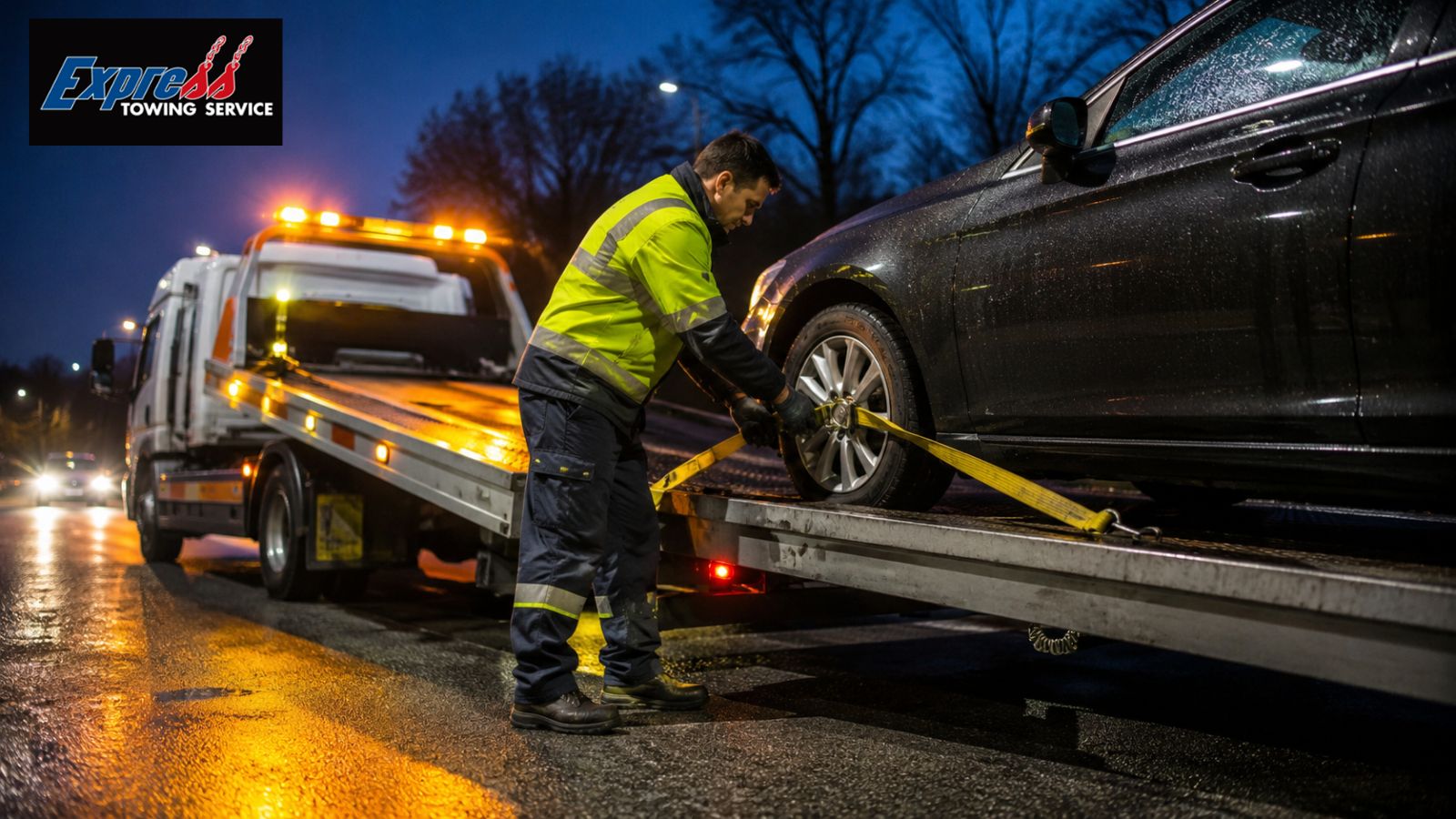
Vehicle malfunctions and highway mishaps can hamper your mental peace. They strike at the worst possible moment. An alternator failure at midnight, a punctured tire during the morning commute, or a collision on a desolate highway can lead to one situation: being stuck on the shoulder of the road. In these cases, having an immediate response from a 24 hour flatbed towing agency can ensure that they arrive at your side without wasting any time.
| Topic | Information |
| Traditional towing methods | Older hook-and-chain tow trucks and wheel lifts were commonly used. Wheel lifts roll two of your tires along the pavement. |
| Flatbed tow truck | A flatbed tow truck transfers your car onto a steel or aluminium platform. |
| Vehicle protection | It helps keep the car’s tires, driveshafts, differential, and bumpers isolated from the road surface. |
| Flatbed towing with winch service | A flatbed towing with winch service can handle many towing needs. It can also help move a vehicle safely out of a ditch. |
| 24 hour flatbed towing dispatch | 24 hour flatbed towing dispatch helps drivers get towing support during roadside emergencies. |
| Accident recovery | Flatbed tow truck for accident recovery is widely used for modern vehicles. |
| Older vehicle designs | Traditional towing methods used steel chains and boom hoists. They raised the front or rear axles and allowed the vehicle to be pulled by its other two wheels at a reduced speed. |
| Why older methods worked | This method was acceptable for rear-wheel-drive vehicles used several decades ago. |
| Modern automobiles | Modern automobiles use sophisticated driving systems. They may also have sport-tuned suspensions, electronic stability control, and low-profile aerodynamics. |
| Need for flatbed towing | These modern features can be fragile during forced movement. As a result, towing professionals and auto manufacturers have turned to alternative transportation methods that use flatbeds. |
When a vehicle’s drive wheels turn while the engine is off, modern automatic and AWD transfer cases do not receive proper mechanical lubrication. Rolling an AWD vehicle or EV behind a tow truck can ruin the transmission or electric drive unit within just a few miles. Flatbed trucks resolve this issue completely by carrying the entire weight of the vehicle on a level deck.
Selecting a flatbed tow truck provides vital mechanical and financial protections for car owners. Here are the core benefits of utilizing 24 hour flatbed towing:
As all four wheels are firmly positioned on a level surface, your vehicle will remain completely immobile when in transit. There is absolutely no wear and tear on your tires, no stress on your drive shafts, and no risk of damaging your front bumper due to scraping as the ramps are inclined.
If your vehicle is stalled due to an off-road situation or if it becomes immobile after an accident, ordinary towing straps can easily twist the frame rails or rip off the bumper cover. However, professionals use flatbed towing services with winches. The process involves using cables and soft strap rigging, which can gently pull your vehicle into the ramp.
Modern electric vehicles (EVs) utilize regenerative braking systems that generate high voltage when the wheels rotate. Similarly, mechanical AWD differentials require active oil pumps running alongside the engine. Transporting these vehicles on a flatbed eliminates any movement of the driveshaft, protecting sensitive electronic sensors and gears.
Flatbed loading is significantly faster than manually installing tow dollies under non-rolling wheels. Hydraulic decks roll back and lower to ground level in under two minutes, allowing operators to secure the vehicle quickly and clear dangerous highway shoulders fast.
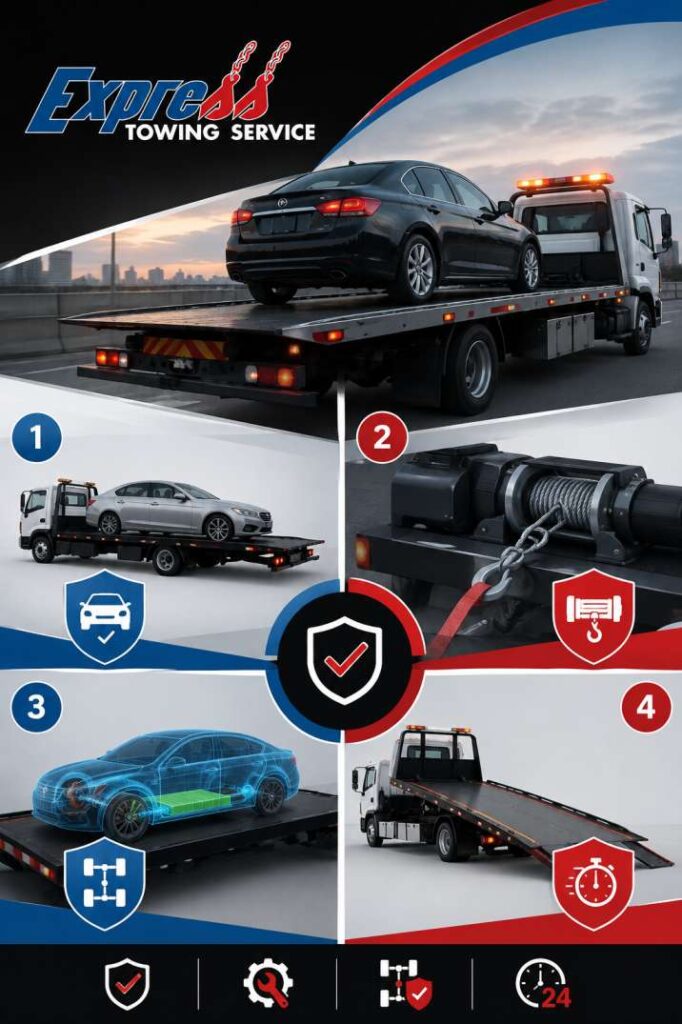
Flatbed towing is the primary transport recommendation across a broad spectrum of real-world roadside scenarios:
When calling a 24 hour flatbed towing dispatch centre, immediately share your exact GPS location, nearby mile markers, vehicle colour, and whether the wheels can roll freely.
Ensure the tow operator secures your vehicle using 8-point tie-downs or soft lasso straps around all four tires. Securing the car by its tires allows the vehicle’s natural suspension to absorb highway bumps during transit without stressing the frame.
If you are using long-distance flatbed towing or midnight emergency dispatch, confirm whether your target repair shop accepts after-hours key drop boxes and overnight vehicle parking.
Take quick, clear photographs of your vehicle’s bodywork, wheels, and interior before it is winched onto the flatbed deck. This provides documentation for insurance claims if pre-existing condition disputes arise.
Follow this action plan during a roadside emergency to ensure a fast, safe, and efficient recovery:
Experiencing a roadside breakdown or vehicle collision is stressful. But choosing the right towing method eliminates damage and long-term repair costs. Choosing a reliable 24 hour flatbed towing dispatch provides complete peace of mind. Whether you require a specialized flatbed tow truck for accident recovery, a same-day flatbed towing service protects your investment every mile of the way. Keep a trusted flatbed dispatch provider’s number saved in your phone, prioritize roadside safety, and insist on zero-ground-contact transport whenever you need assistance. So, utilize the same day flatbed towing service from Express Towing Services.
Flatbed towing ensures that all four wheels are completely off the ground. When turning the wheels on an AWD vehicle with the engine off, you risk losing all oil pressure to the internal differentials, transmissions, and transfer cases. These can ultimately destroy the drivetrain.
Yes, professional operators provide a winch service using either steel or synthetic cable to slowly pull the vehicle out of the ditch, mud, snow, or whatever the obstacle may be before winching the vehicle up on the flatbed.
Yes, most flatbed tow trucks today offer a hydraulic rollback feature allowing for minimal ground clearance while loading the vehicle on the truck, thus avoiding scraping off front splitters, oil pans, side skirts, and exhaust tips.
Most 24 hour flatbed towing dispatch centres prioritize emergency breakdowns and accident scenes, typically arriving within 20 to 45 minutes depending on traffic conditions and location.
Wheel-lift towing only lifts two wheels off the pavement, allowing the other two wheels to drag on the road surface. A flatbed tow truck lifts the entire vehicle onto a steel platform, eliminating any tire drag and potential damage.


