

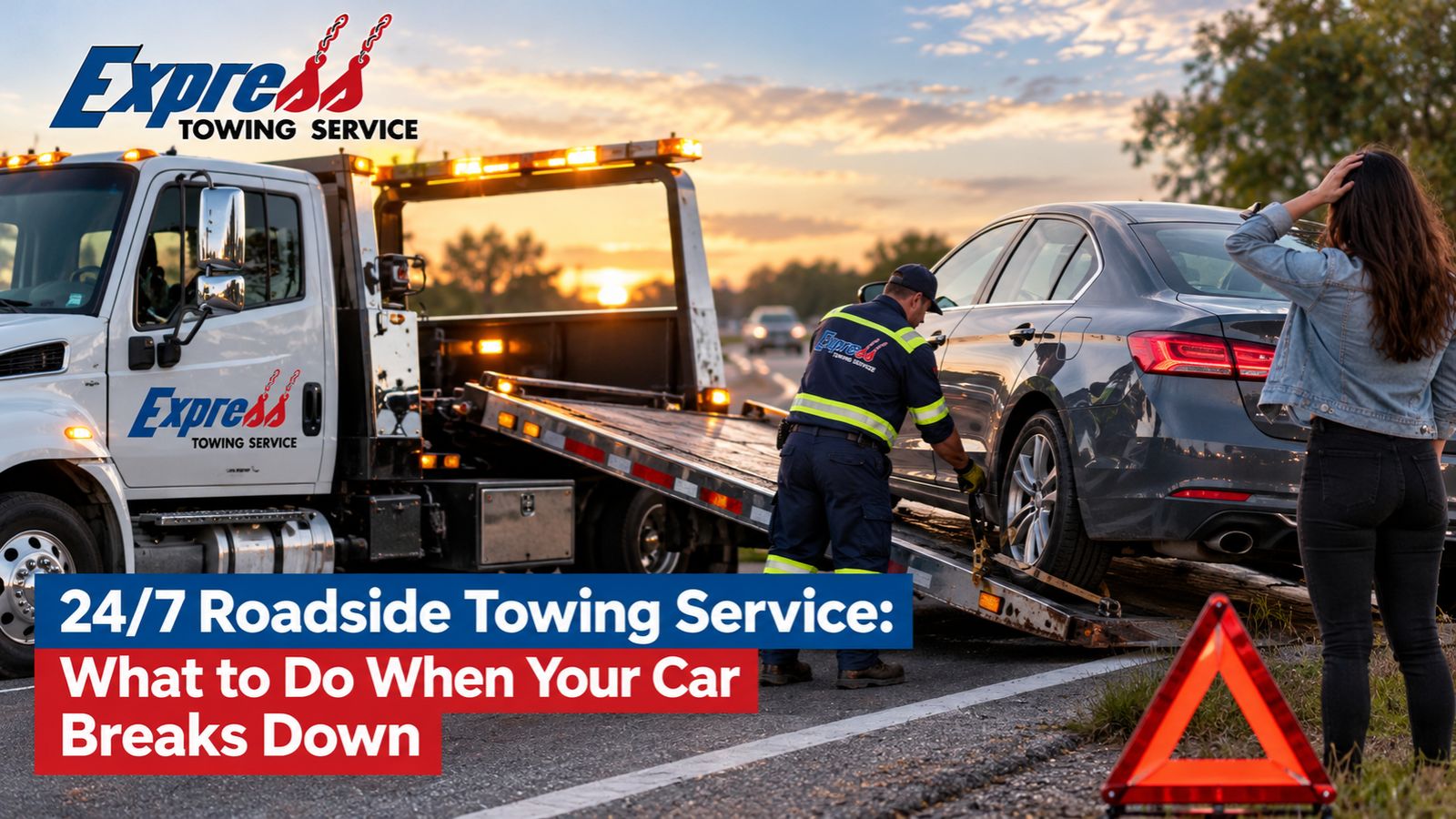
A vehicle breakdown can happen without warning, whether you are commuting to work, driving home late at night, or travelling on a Canadian highway. A flat tyre, dead battery, overheating engine, or sudden mechanical failure can leave you stranded and unsure what to do next. Knowing when to move to safety, what information to share, and when to request a 24/7 roadside towing service can make a stressful situation easier to manage. With a clear plan, you can protect yourself, reduce the risk of further vehicle damage, and arrange appropriate assistance.
When your vehicle stops working unexpectedly, your first priority should be safety rather than diagnosing the mechanical problem. If the car is still moving and you can control it, gradually reduce speed, signal, and steer towards a safe location away from moving traffic. Avoid sudden braking or sharp steering, particularly on wet, icy, or uneven roads. If the engine loses power, remember that steering and braking may become more difficult.
Once stopped, activate your hazard lights to make your vehicle more visible. If possible, position the car on a wide shoulder, parking area, or other safe space. On a busy highway, do not stand beside the vehicle or attempt repairs close to passing traffic. If remaining inside creates an immediate danger, such as a fire, use your judgement to move away from traffic when it is safe to do so.
Look for warning signs that indicate the vehicle should not be driven further. Smoke, a strong burning smell, leaking fluids, severe engine knocking, or a rising temperature gauge can indicate a serious problem. Do not open a hot radiator cap or touch damaged electrical components. If you suspect a fuel leak or see flames, move away from the vehicle and contact emergency services when necessary.
Not every breakdown requires the same response. A discharged battery may need a suitable jump-start, while a damaged wheel, transmission failure, or overheated engine may require towing. If you are uncertain about the cause, avoid repeated attempts to start the vehicle. Describe the symptoms to the towing operator so they can help determine the appropriate assistance.
A 24/7 roadside towing service can be useful when a vehicle becomes unsafe or impossible to drive outside normal business hours. Breakdowns do not follow a convenient schedule, and waiting until morning may not be practical if your car is blocking a driveway, stranded in an exposed location, or unable to move safely.
Consider arranging a tow when you experience any of the following situations:
The appropriate response depends on the vehicle’s condition and your surroundings. A minor battery issue might be resolved without towing, but a mechanical fault should not be ignored simply because the car can still move.
Searching for a 24/7 emergency tow truck near me can help you identify towing options when you are stranded. However, choosing the first result without checking important details may create unnecessary delays or unexpected costs. Before arranging assistance, make sure the provider can reach your location and handle the type of vehicle or breakdown involved.
Provide the road name, nearest intersection, highway exit, kilometre marker, or a nearby landmark. If you are using a navigation application, confirm that the location pin matches where the vehicle is actually stopped. On rural roads or highways, directional information can be especially helpful because nearby landmarks may be limited.
Explain whether the vehicle is in a parking lot, on a shoulder, in an underground garage, or in another restricted area. This helps the operator assess access requirements and identify potential obstacles before dispatching a truck.
Tell the operator the vehicle’s make, model, approximate size, and whether it has special requirements, such as all-wheel drive, low ground clearance, or significant accident damage. Explain whether the wheels turn freely, the steering works, and the vehicle can shift into neutral, if you know these details safely.
Accurate information helps the provider select suitable equipment. For example, some vehicles may require a flatbed rather than a conventional wheel-lift arrangement, depending on the drivetrain, damage, and manufacturer guidance.
Before confirming the service, ask about the estimated arrival time, call-out charge, towing distance included, and any additional fees. The final cost may depend on distance, vehicle type, recovery difficulty, time of day, and the destination. Ask whether taxes or other applicable charges are included in the estimate.
Arrival times can change because of weather, traffic, road closures, and other recovery jobs. A responsible provider should communicate realistic expectations rather than promise an arrival time that cannot be guaranteed.
When you search for an immediate towing service near me, clear communication can help reduce avoidable delays. Start by explaining whether the vehicle is creating a traffic hazard, whether anyone is injured, and whether there are signs of fire, smoke, or a fluid leak. If there is immediate danger, contact emergency services first rather than relying solely on a towing operator.
Next, provide your location, contact number, vehicle details, and the nature of the problem. Tell the operator if the car is electric or hybrid, has been involved in a collision, or is positioned somewhere difficult to access. These details can affect equipment selection and the recovery procedure.
Finally, confirm the destination before the truck arrives. You might need the vehicle transported to your home, a repair facility, a secure storage location, or another agreed destination. If you do not yet know which repair facility to use, discuss the available options and any destination-related charges before authorizing the tow.
Roadside conditions across Canada vary significantly by season and region. Drivers may encounter freezing temperatures, snow-covered shoulders, black ice, heavy rain, reduced visibility, and long distances between populated areas. These conditions can make a breakdown more challenging, particularly when a vehicle stops in an isolated location or during severe weather.
An emergency towing service Canada drivers use should be arranged with consideration for the location, vehicle condition, and weather. During winter, for example, a car with a discharged battery may not start after sitting in freezing temperatures. Repeatedly cranking the engine can drain the battery further, while attempting to drive a vehicle with serious mechanical problems can increase the risk of damage.
Keep warm clothing, gloves, a blanket, a charged phone, a flashlight, and basic emergency supplies in your vehicle during colder months. Maintain a reasonable amount of fuel or battery charge for your travel conditions, and let someone know your route when travelling through remote areas.
If stranded during severe weather, remain aware of your surroundings and the risk of carbon monoxide exposure. Never operate a fuel-burning heater inside a vehicle or enclosed space. If you run the engine for warmth, ensure the exhaust pipe is clear of snow and follow the vehicle manufacturer’s safety guidance. If conditions become dangerous, contact emergency services.
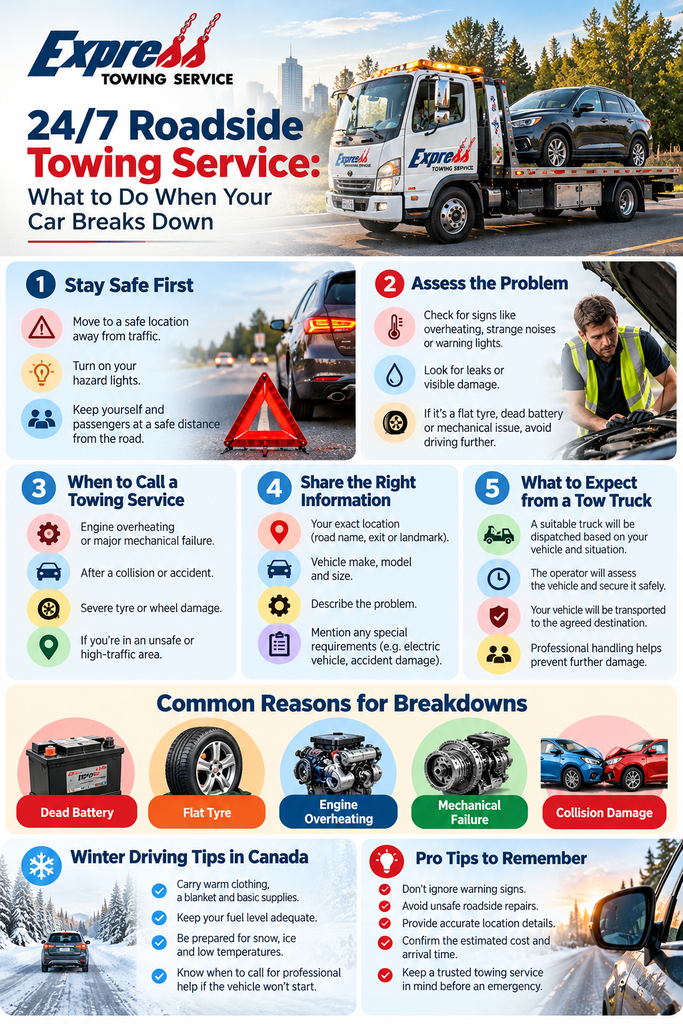
Understanding how towing works can help you prepare and protect your vehicle. When the operator arrives, explain the symptoms again and identify any known damage. The operator should assess the vehicle’s position, available access, wheel condition, and any special handling requirements before loading or recovering it.
Depending on the circumstances, the vehicle may be transported on a flatbed or using another suitable towing method. The choice depends on the vehicle’s design, drivetrain, condition, and manufacturer recommendations. A vehicle with collision damage or locked wheels may require additional equipment or a more involved recovery procedure.
Before the vehicle is loaded, remove valuables and personal items if it is safe to do so. Keep your keys available, take photographs of existing damage when appropriate, and confirm the agreed destination. If you cannot safely access the vehicle, do not put yourself at risk to retrieve belongings.
Once the vehicle has been secured, confirm where it is being transported and how you will receive any relevant documentation. If the breakdown follows a collision, retain applicable records and follow your insurer’s instructions regarding vehicle recovery and repair.
A breakdown can create pressure to make quick decisions, but several common mistakes can increase the risk of injury or additional repair costs.
Continuing to drive despite warning signs: An overheating engine, oil-pressure warning, severe vibration, or unusual mechanical noise should not be ignored. Pull over safely and seek appropriate assistance.
Attempting repairs beside fast-moving traffic: Changing a tyre or inspecting the underside of a vehicle on a narrow highway shoulder can expose you to serious danger. Move to a safer location when possible and request assistance.
Accepting an unclear price: Ask for a cost estimate and clarify possible extra charges before authorizing the work. If the situation requires immediate emergency recovery, prioritize safety and clarify the terms as soon as practical.
Providing an inaccurate location: A vague description can delay dispatch and make it harder for the operator to find you. Share specific landmarks and update the operator if your location changes.
Assuming every tow truck can handle every vehicle: Electric vehicles, all-wheel-drive cars, modified vehicles, and heavily damaged vehicles may need specialized handling. Share these details when requesting service.
When a breakdown interrupts your journey, clear communication and suitable recovery arrangements matter. Express Towing Services is the brand to contact when you need to discuss towing assistance for a disabled vehicle. Explain what happened, where the vehicle is located, and whether there are any visible hazards or special handling requirements. Before confirming a job, ask about availability, estimated arrival time, pricing, and the proposed destination so you understand the arrangements.
Choosing a towing provider should involve more than speed alone. Appropriate equipment, careful vehicle handling, transparent communication, and clear service terms are important considerations. Express Towing Services can be your point of contact for discussing your towing needs and determining the appropriate next step. Keep the contact details of your preferred provider accessible before an emergency occurs, and make vehicle safety your priority whenever a breakdown happens.
Move towards a safe shoulder or designated stopping area if you can control the vehicle. Activate your hazard lights and avoid standing near moving traffic. If it is safe to exit, move away from the roadway and wait in a protected location. If leaving the vehicle would expose you to traffic, consider whether remaining inside is safer. Contact emergency services if there is an immediate hazard, and arrange towing when the vehicle cannot be driven safely.
Arrival time depends on your location, traffic, weather, road accessibility, equipment requirements, and the provider’s current workload. Urban locations may have different response times from remote highways or rural roads. When booking, provide an accurate location and ask for an estimated arrival window. Treat that estimate as provisional and request an update if the situation changes or you have been waiting longer than expected.
Yes, a suitable towing vehicle can generally transport a car that will not start, but the recovery method depends on the vehicle’s condition and design. A car with locked wheels, accident damage, or an electronic parking brake that will not release may need specialized equipment. Tell the operator about these problems in advance so they can determine the safest loading and transport method.
Not always. A discharged battery may be resolved with an appropriate jump-start or battery replacement if the vehicle and circumstances allow it. However, repeated starting failures, a damaged battery, electrical faults, or problems with the charging system may require further assessment. If you are stranded in an unsafe location or the cause is uncertain, request professional roadside assistance and follow the operator’s advice about whether towing is necessary.
Check tyre condition, fluid levels, warning lights, battery health, and the condition of essential vehicle equipment before longer journeys. In winter, carry warm clothing, a flashlight, a phone charger, and suitable emergency supplies. Keep your fuel level or battery charge appropriate for the route and weather. Save a towing provider’s contact details, understand your roadside assistance coverage, and know how to activate your hazard lights. Preparation cannot prevent every breakdown, but it can help you respond more safely and efficiently when one occurs.


