

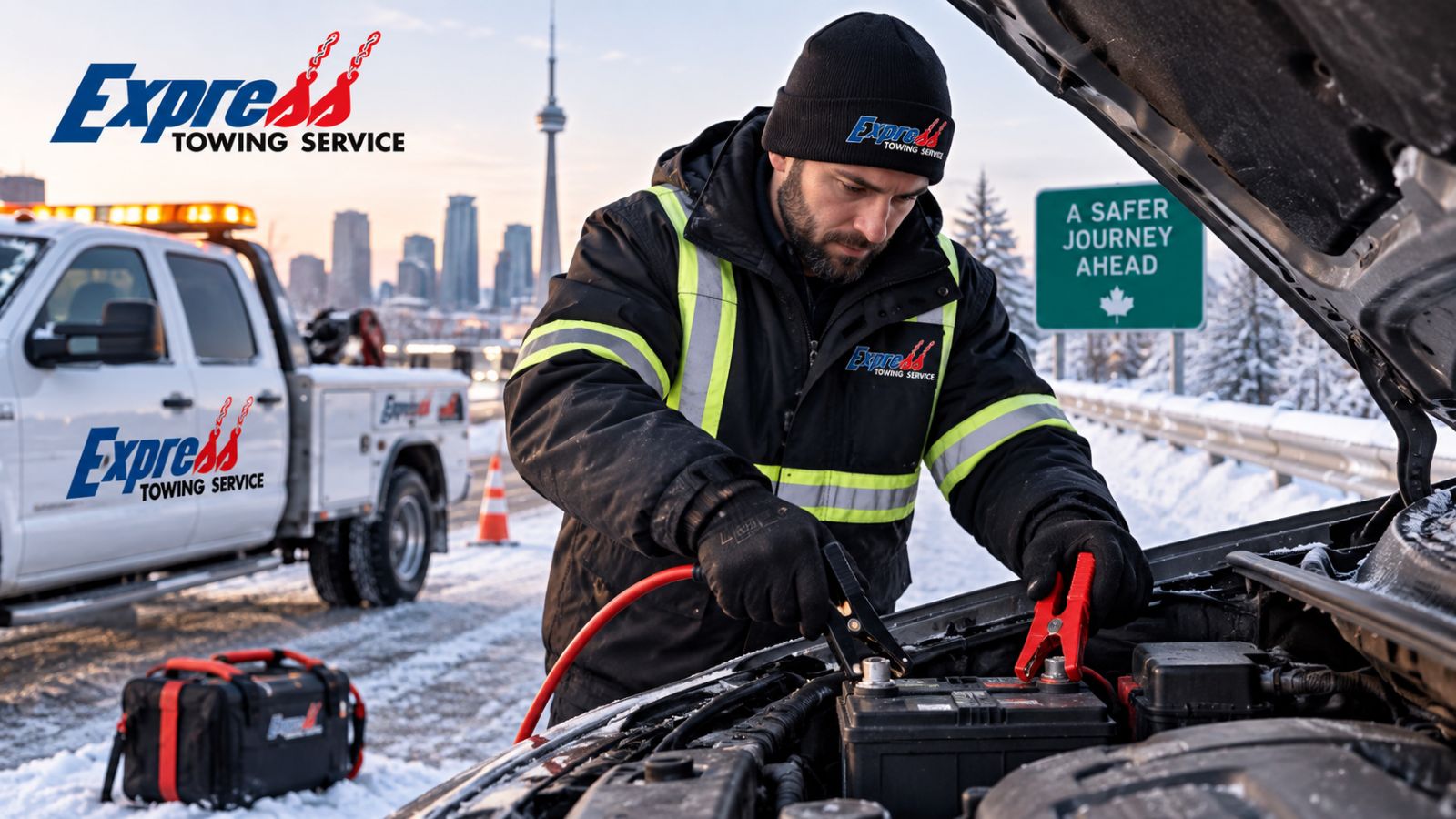
A dead vehicle battery rarely happens at a convenient time. It can happen outside a workplace, in a shopping-centre car park, on a rural road, or in your driveway on a freezing Canadian morning. When the engine will not turn over, many drivers are tempted to use whatever equipment is nearby or ask another motorist for help. However, battery boosting involves more than simply connecting two vehicles. Choosing a professional battery boost service Canada can provide a controlled approach that considers the vehicle, battery condition, electrical system and surrounding safety risks.
A modern vehicle’s electrical system is considerably more complex than the systems found in many older cars. Today’s vehicles can contain electronic control modules, sensors, safety systems, infotainment equipment and sophisticated charging systems. A battery that appears completely flat may have several possible causes, including an ageing battery, lights being left on, extreme temperatures, an electrical drain or a charging-system problem.
A jump start may restore enough electrical power for an engine to start, but starting the vehicle does not necessarily mean the underlying problem has been solved. If the battery is failing internally or the alternator is not charging correctly, the vehicle may stop again shortly afterwards.
This is one reason professional assistance can be useful. A trained roadside technician can look beyond the immediate no-start symptom and consider whether the vehicle is actually suitable for a boost or whether it needs further attention.
Improvised boosting is often attempted with good intentions. A driver may have jumper cables in the boot and another vehicle nearby, making the solution appear straightforward. The problem is that the wrong connection, unsuitable equipment or incorrect procedure can create unnecessary risks.
Potential problems include:
Not every flat battery should simply be boosted. A professional assessment can help determine whether supplying temporary power is appropriate in the circumstances.
A battery can lose its ability to hold a charge as it ages. Cold temperatures can make the problem more noticeable because batteries generally have reduced performance in very low temperatures. If a vehicle has struggled to start several times recently, a boost may only provide temporary relief.
This is where battery boost and battery health check should be considered together. A battery health assessment can provide useful information about whether the battery is likely to remain reliable after the vehicle starts. It does not guarantee that a future failure will not occur, but it can help identify a battery that is approaching the end of its useful service life.
Professional technicians generally approach a no-start situation by assessing the vehicle before connecting equipment. This matters because not all vehicles have identical battery locations, terminal arrangements or electrical requirements.
For example, some vehicles have the main battery in unusual locations, while others provide designated boost terminals under the bonnet. A technician who understands the vehicle’s configuration can use the appropriate connection points and equipment rather than relying on guesswork.
Professional Battery Boosting is therefore not simply about delivering electrical power. It is about applying that power appropriately while considering the condition of the vehicle and the surrounding environment.
The quality and suitability of boosting equipment can make a difference. Professional roadside operators may use purpose-designed jump packs, cables and related equipment appropriate for roadside situations. The exact equipment used will depend on the vehicle and circumstances.
Improvised solutions can involve damaged cables, inadequate clamps or equipment that is not suitable for the vehicle. A cable that becomes hot during use, for example, should not simply be ignored. Equipment condition is an important part of roadside safety.
Cold weather is a major consideration for Canadian drivers. When temperatures fall significantly, a vehicle battery can have more difficulty delivering the power required to start the engine. Engine oil can also become more resistant to movement in cold conditions, increasing the effort required during startup.
This combination can expose a battery that was already becoming weak.
A driver might therefore experience a vehicle that starts normally during milder weather but struggles after sitting outside overnight in winter. Repeated difficult starts can also place additional strain on the battery and starting system.
A battery does not always provide an obvious warning before failing. Some drivers notice slower cranking, dimmer lights or electrical irregularities beforehand, while others experience a sudden no-start situation.
Keeping the vehicle maintained before winter can reduce avoidable problems. Checking the battery, charging system and relevant electrical connections can be particularly useful before periods of severe cold.
If a vehicle will be parked outside for extended periods, owners should also consider the age and condition of the battery rather than assuming that a previous successful start means the battery is healthy.
There are situations where a temporary boost may be a practical way to get a vehicle running again. For example, a driver may have accidentally left the interior lights on overnight, resulting in a discharged but otherwise healthy battery.
In another situation, however, the battery may have deteriorated internally. If the vehicle repeatedly needs boosting, replacing or properly diagnosing the battery may be more appropriate than continuing to rely on temporary assistance.
An emergency battery boost for vehicles should therefore be viewed as a response to a no-start situation, not automatically as a permanent repair. Once the vehicle has started, the driver should consider why the battery became discharged in the first place.
Extra caution is appropriate if there are visible signs of battery damage, unusual smells, leaking fluid, severe corrosion or other electrical problems. Drivers should not treat a visibly damaged battery as an ordinary flat battery.
Similarly, if the vehicle has experienced repeated starting failures, a boost may not address the underlying cause. There could be an issue with the alternator, starter, battery terminals, wiring or another part of the charging and starting system.
A professional can determine whether the situation appears suitable for a boost or whether another form of assistance is more appropriate.
A boost answers one immediate question: can the vehicle receive enough power to start?
A health check asks a different question: is the battery likely to continue functioning reliably?
Those questions are related but not identical. A battery can sometimes accept enough temporary power to start an engine even when its overall condition is poor. This is why drivers should not automatically assume that a successful boost means the battery is healthy.
A useful roadside assessment may consider:
This information can help the driver decide what to do next instead of simply returning to the road and hoping the problem does not happen again.
One of the most common mistakes is treating every vehicle as though it has the same electrical configuration. While many vehicles use conventional 12-volt systems, manufacturers can have different requirements and designated connection points.
Another mistake is rushing because the driver is cold, late or stranded in an inconvenient location. Rushing increases the chance of connecting equipment incorrectly or overlooking a safety concern.
Drivers may also assume that leaving a vehicle running for a short period will automatically recharge a severely discharged battery. The charging behaviour depends on the battery, alternator, vehicle and operating conditions. A short drive does not necessarily restore a battery that is significantly depleted or deteriorated.
If you have needed several boosts within a relatively short period, treat that pattern as useful information.
A recurring dead battery can indicate:
Repeatedly requesting a boost without investigating the cause can leave you vulnerable to another breakdown at a less convenient time.
A roadside battery boost service is designed to assist when a vehicle cannot start because of insufficient battery power. When requesting assistance, provide useful information about the vehicle and situation whenever possible.
Tell the roadside provider:
These details help the technician understand the situation before arriving.
A roadside battery problem should not encourage a driver to stand in an unsafe location. If the vehicle is stopped near moving traffic, on a narrow shoulder or in another hazardous position, personal safety should take priority over attempting a repair.
Hazard lights can be useful when appropriate, but drivers should follow the circumstances and local road-safety requirements. If the vehicle can be moved safely to a more secure location, that may reduce exposure to passing traffic. If it cannot, professional roadside assistance can help manage the situation.
A dead battery at midday in a residential driveway is very different from a dead battery at night on an unfamiliar road. Visibility, traffic, weather and personal safety all affect the situation.
Trying to troubleshoot an electrical problem in darkness can make it harder to identify battery terminals, inspect cables or notice damage. Working close to traffic adds another risk.
Professional assistance can remove much of the uncertainty from the situation. Instead of attempting to improvise with limited visibility and equipment, the driver can focus on staying in a safe location while qualified roadside help handles the vehicle.
Traditional petrol and diesel vehicles commonly use 12-volt electrical systems, but vehicle design varies considerably. Hybrid and electric vehicles require particular caution because they may contain high-voltage systems in addition to conventional low-voltage electrical components.
Owners of hybrid or electric vehicles should follow the manufacturer’s instructions regarding 12-volt battery assistance. A roadside technician should also know the vehicle type before attending so that appropriate procedures can be followed.
The important principle is simple: do not assume that a method suitable for one vehicle automatically applies to another.
Preventing a dead battery is generally easier than dealing with one after it happens. Drivers can take several practical steps to improve their chances of avoiding unexpected battery failure.
If your battery is older or the vehicle has shown slow-starting symptoms, consider having it assessed before the coldest part of the season. Winter is often when borderline batteries reveal their weaknesses.
Notice changes such as slower engine cranking, repeated clicking or intermittent starting. These symptoms do not identify a single fault by themselves, but they are worth investigating.
Leaving lights, accessories or other electrical equipment operating while the engine is off can discharge the battery. Modern vehicles may have automatic shut-off systems, but drivers should not rely entirely on them.
Save a reliable roadside assistance contact in your phone before an emergency occurs. If your phone battery is low, having the information available through another means can also be useful.
Read the owner’s manual for information about the vehicle’s battery, designated boost points and manufacturer-specific precautions. This is particularly important for newer vehicles, hybrids and electric vehicles.
When comparing roadside assistance providers, look beyond the promise of simply arriving with jumper cables. Consider whether the provider communicates clearly, asks useful questions about the vehicle and can explain what will happen if the vehicle does not start after the boost.
Availability, response arrangements, service area and vehicle compatibility are also worth confirming before an emergency occurs. A reputable provider should be transparent about what the service involves rather than suggesting that every no-start problem can be solved with a simple battery boost.
Professional Battery Boosting should ultimately be about safe assistance and informed decision-making. The goal is not merely to make the engine turn over for a few minutes, but to help the driver understand what has happened and what may need attention afterwards.
A dead battery is frustrating, but rushing into an improvised solution can create additional problems. Incorrect connections, unsuitable equipment, damaged batteries and unsafe roadside conditions can turn a simple no-start situation into a more serious incident.
A professional battery boost service Canada can provide a more controlled approach by considering the vehicle, battery condition, electrical system and roadside environment. A boost may be all that is required in some situations, while other cases may call for battery replacement, charging-system diagnosis or further mechanical assistance.
For drivers who need roadside assistance, Express Towing Services can be considered when looking for professional support with battery-related roadside problems. Providing accurate vehicle and location information can help the service understand the situation before assistance is dispatched.
Ultimately, Professional Battery Boosting is about more than getting a vehicle started. It is about handling a roadside electrical problem carefully, recognising when a boost is appropriate, and knowing when a deeper battery or vehicle issue needs attention.
Professional assistance can reduce some risks because trained roadside personnel can assess the vehicle, use suitable equipment and follow appropriate procedures. However, no roadside service is completely risk-free. If the battery is damaged, leaking or otherwise unsafe, the technician may recommend another solution rather than proceeding with a conventional boost. The condition and design of the individual vehicle always matter.
Incorrect boosting procedures or unsuitable equipment can potentially cause electrical problems. Modern vehicles contain sensitive electronic components, so drivers should not assume that any available power source or cable arrangement is appropriate. Following the manufacturer’s guidance and using suitable equipment helps reduce unnecessary risk. If you are unsure about the correct procedure, professional roadside assistance is a sensible option.
Repeated battery failures can have several causes. The battery may be reaching the end of its service life, the charging system may not be working correctly, or an electrical accessory may be draining power when the vehicle is parked. Poor connections can also contribute. If a vehicle repeatedly requires boosting, the underlying cause should be investigated instead of treating each incident as an isolated event.
Not necessarily. A boost only indicates that the vehicle received enough electrical power to start; it does not automatically prove that the battery needs replacement. A relatively healthy battery may have been discharged because lights or another accessory were left operating. Conversely, an older battery may start after a boost but fail again soon afterwards. A battery assessment can help determine the appropriate next step.
Hybrid and electric vehicles require particular attention because their electrical architecture differs from conventional petrol and diesel vehicles. Many have a separate low-voltage battery that supports vehicle electronics, but the high-voltage system must not be treated like a conventional battery. Owners should follow the manufacturer’s instructions and use a technician familiar with the vehicle type rather than improvising a procedure.


