

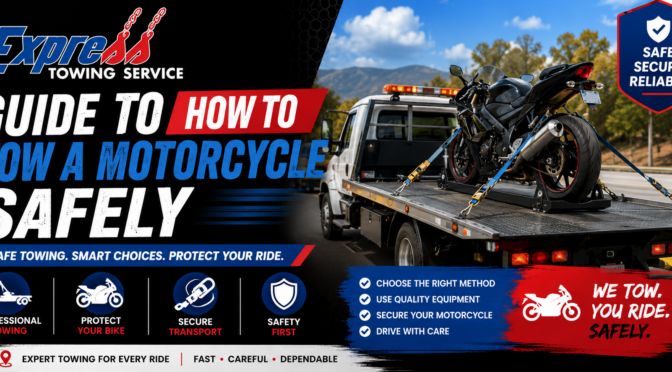
Motorcycle towing comes with some challenges because of its unique balance and weight distribution, which are very different from four-wheelers. Although it might seem that transporting a motorcycle does not require any special knowledge, towing the bike incorrectly may cause serious harm. If your motorcycle breaks down or needs to be transported for another reason, you need to be well aware of motorcycle towing methods.
In this guide, you will learn about how to tow a motorcycle safely, along with the most suitable motorcycle towing methods. It is also to be noted that there might be some mistakes commonly found in motorcycle towing, and these need to be avoided. Additionally, the guide will include useful advice from experienced professionals in order to help protect your motorcycle while being towed.
Why Motorcycle Towing Requires Special Care
As opposed to a car, motorcycles are unstable and more susceptible to damage when being transported. Two wheels create a high risk of imbalance that may cause damage to different parts, such as the suspension system, bodywork, handlebars, and even tires if they aren’t secured properly.
Your motorcycle, if towed incorrectly, may:
- Shift during transportation;
- Fall off a trailer or the back of a truck;
- Pose a danger to the other drivers;
- Potential cosmetic and mechanical damage.
So if you know about the safety measures related to motorcycle towing, it will be good for you. Knowing how to tow a motorcycle safely can save you money.
Best Motorcycle Towing Methods
There are many ways of safely towing a motorbike, each better suited depending on individual situations, budget, and distance.
1. Flatbed Tow Trucks
Flatbed tow trucks offer a very effective towing service, ensuring vehicle safety.
Advantages:
- Upright position of the bike
- No tire wear during transport
- Low risk of causing any damage to the bike
- Good option for long-distance towing
Flatbed stomachs are preferred by companies because they recognize their ability to transport bikes efficiently.
When to Use It:
- In case of an accident
- Long distance travels
- For luxury motorbikes
- If the bike is not running
2. Motorbike Trailer
Motorcycle trailers represent another safe and popular towing solution.
Advantages:
- Tailor-made for motorcycles
- More suitable for personal transportation
- Cost-effective for regular users of motorcycles
- In order to use a motorcycle trailer safely:
- Lock the front wheel into the wheel chock
- Use ratchet straps
- It is ideal for people participating in races, rallies, etc.
3. Motorbike Loading onto a Pickup Truck
Use your pickup truck if you need additional storage.
- Using proper ramps, the loading and unloading should be done carefully.
- Attach tie-down straps
- Place your bike in the front corner of your truck
- Do not let your bike move left and right using wheel chocks.
4. Pickup Truck Transport
Using a pickup truck can give a good outcome if used correctly.
- Use a hard loading ramp
- Tie the motorcycle with at least four tie-down straps
- Place the bike in the front corner of the truck bed
- Prevent sideways movement with wheel chocks
This is a practical solution, but this method should be employed with extra care because loading and unloading might be risky.
5. Motorcycle Tow Dolly
A tow dolly lifts one wheel off the ground while keeping the other on the road. These can be used for medium speeds and short distances. These are affordable and compact solutions. These are easy short-distance towing. These are not as stable as the trailers and are not suitable for all types of motorcycles.
Preparing Your Motorcycle for Safe Towing
Before transporting your motorcycle, proper preparation is essential.
Inspect the Motorcycle
Check for:
- Loose accessories
- Fluid leaks
- Tire condition
- Battery security
Detachable items like saddlebags or phone mounts should be removed in order to prevent damage during transport.
Use Quality Tie-Down Straps
Cheap straps can cause towing accidents.
Choose:
- Heavy ratchet straps
- Soft loops to protect handlebars
- Straps rated for motorcycle weight
Try to avoid old or faulty straps as they may not function during transit.
Secure the Motorcycle Properly
When the bike is fastened securely, it should remain upright, and there should not be any excessive movement.
- Attach straps to strong frame points
- Avoid attaching to plastic parts
- Keep the bike centered
- Tighten straps properly
Over-tightening of the straps can damage suspension components, while loose straps can allow rapid movement.
Essential Bike Transport Safety Tips
Following proper bike transport safety procedures can prevent accidents and expensive repairs.
Keep the Motorcycle Upright
Motorcycles should always remain upright during towing. Leaning can:
- Cause oil leaks
- Stress the suspension
- Damage bodywork
Using a wheel chock helps maintain stability.
Check Straps Frequently
Straps may loosen due to road vibration.
During long trips:
- Stop every 50–100 miles
- Recheck strap tension
- Inspect wheel positioning
This simple step dramatically improves towing safety.
Drive Carefully
When towing a motorcycle:
- Avoid sudden braking
- Take turns slowly
- Accelerate gradually
- Maintain extra following distance
Smooth driving reduces shifting and protects the motorcycle.
Protect the Motorcycle from the Weather
Rain, dust, and road debris can damage exposed motorcycles.
Consider using:
- A breathable motorcycle cover
- Weather-resistant protective film
- Soft padding around sensitive areas
This is especially important for long-distance towing.
Common Motorcycle Towing Mistakes to Avoid
Even experienced riders make towing mistakes. Avoiding these common errors can save money and prevent accidents.
Using Incorrect Tie Points
Attaching straps to mirrors, handlebars, or fragile components can cause serious damage.
Always Use:
- Frame-mounted points
- Triple clamps
- Designated towing areas
Motorcycle Tow Dolly
A tow dolly lifts one wheel off the ground while the other remains on the road.
Pros:
- Compact and affordable
- Easy for short-distance towing
Cons:
- Less stable than trailers
- Not suitable for all motorcycles
Tow dollies should only be used for short distances and moderate speeds.
Preparing Your Motorcycle for Safe Towing
Before transporting your motorcycle, proper preparation is essential.
Inspect the Motorcycle
Check for:
- Loose accessories
- Fluid leaks
- Tire condition
- Battery security
Removing detachable items like saddlebags or phone mounts can prevent damage during transport.
Use Quality Tie-Down Straps
Cheap straps are one of the leading causes of towing accidents.
Choose:
- Heavy-duty ratchet straps
- Soft loops to protect handlebars
- Straps rated for motorcycle weight
Avoid worn or frayed straps because they may snap during transit.
Secure the Motorcycle Properly
A securely fastened bike should remain upright without excessive movement.
Key Securing Tips:
- Attach straps to strong frame points
- Avoid attaching to plastic parts
- Keep the bike centered
- Tighten straps evenly
Proper strap tension is crucial. Over-tightening can damage suspension components, while loose straps can allow dangerous movement.
Essential Bike Transport Safety Tips
Following proper bike transport safety procedures can prevent accidents and expensive repairs.
Keep the Motorcycle Upright
Motorcycles should always remain upright during towing. Leaning can:
- Cause oil leaks
- Stress the suspension
- Damage bodywork
Using a wheel chock helps maintain stability.
Check Straps Frequently
Straps may loosen due to road vibration.
During Long Trips:
- Stop every 50–100 miles
- Recheck strap tension
- Inspect wheel positioning
This simple step dramatically improves towing safety.
Drive Carefully
When towing a motorcycle:
- Avoid sudden braking
- Take turns slowly
- Accelerate gradually
- Maintain extra following distance
Smooth driving reduces shifting and protects the motorcycle.
Protect the Motorcycle from Weather
Rain, dust, and road debris can damage exposed motorcycles.
Consider Using:
- A breathable motorcycle cover
- Weather-resistant protective film
- Soft padding around sensitive areas
This is especially important for long-distance towing.
Conclusion: Learning the Best Motorcycle Towing Methods
Learning how to tow a motorcycle safely is a useful skill. Knowing the proper methods can help tow your motorcycle all by yourself effectively without causing any harm. By practicing smart vehicle safety habits and using recommended equipment, you can avoid accidents and also protect your motorcycle from damage.
FAQS
1. What is the safest way to tow a motorcycle?
The safest way to tow a motorcycle is by using a flatbed tow truck or a motorcycle trailer. These motorcycle towing methods keep the bike upright and reduce movement.
2. Can I tow a motorcycle using a pickup truck?
Yes, a pickup truck can be used for motorcycle transport if proper bike transport safety measures are followed. Use a strong loading ramp, wheel chocks, and at least four heavy-duty tie-down straps to secure the motorcycle properly.
3. How often should I check the straps during motorcycle towing?
During long-distance towing, you should stop every 50–100 miles to inspect the tie-down straps and wheel positioning.
4. What are the most common motorcycle towing mistakes?
Common mistakes include using weak straps, attaching tie-downs to fragile parts, over-tightening the suspension, and ignoring towing weight limits.
5. Why is keeping a motorcycle upright important during towing?
Keeping the motorcycle upright helps prevent oil leaks, suspension stress, and body damage. Using wheel chocks and proper towing equipment ensures better stability and safer motorcycle towing throughout the journey.


